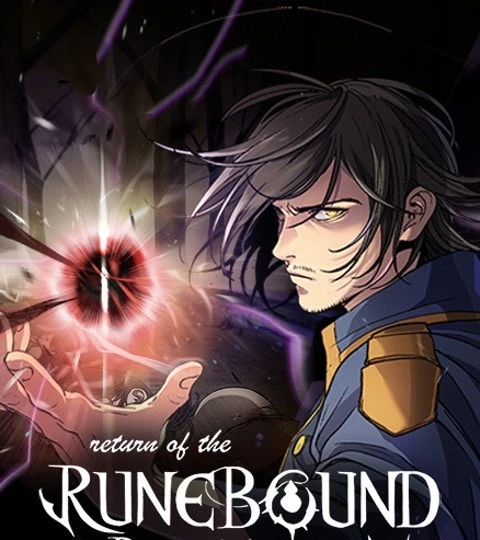
Return of the Runebound Professor is worth trying if you like magic-academy stories where learning is part of the conflict. Its most promising early idea is a teacher who knows how to teach but does not understand the subject he has inherited. The opening mixes that problem with repeated deaths and an identity he cannot safely explain.
This review covers the first three episodes of the WEBTOON adaptation. It discusses the setup and first classroom scene without revealing later comic or novel developments.
Where to read the comic
Start with Return of the Runebound Professor, episode 1 on WEBTOON. The official series page has the episode list and current release schedule. You can read the opening episodes on the website. For episodes offered through the app, check whether payment or a waiting period applies before unlocking them.
Return of the Runebound Professor is a webcomic adaptation of Actus’s novel, with Laurel Pursuit credited on WEBTOON. It is not a Korean manhwa, despite the label used on some reading sites.
A teacher’s instincts in someone else’s life
Noah Vines was a music teacher on Earth. After a long, unsettling experience beyond death, he finds himself in Vermil’s body in a world where magic is real. The new body comes with a dangerous history and a teaching job at Arbitage, a runic academy.
Noah knows how to help students learn, but he does not know what a rune is or how to use one. Asking the wrong question could expose him. People who recognize Vermil also bring expectations and grudges that Noah knows nothing about.
The first episode establishes why teaching matters to Noah before the academy arrives. His memories of students give him a connection to the life he lost. That makes the later classroom more than a convenient place for the story to explain its magic system.
The first lesson is the strongest early hook
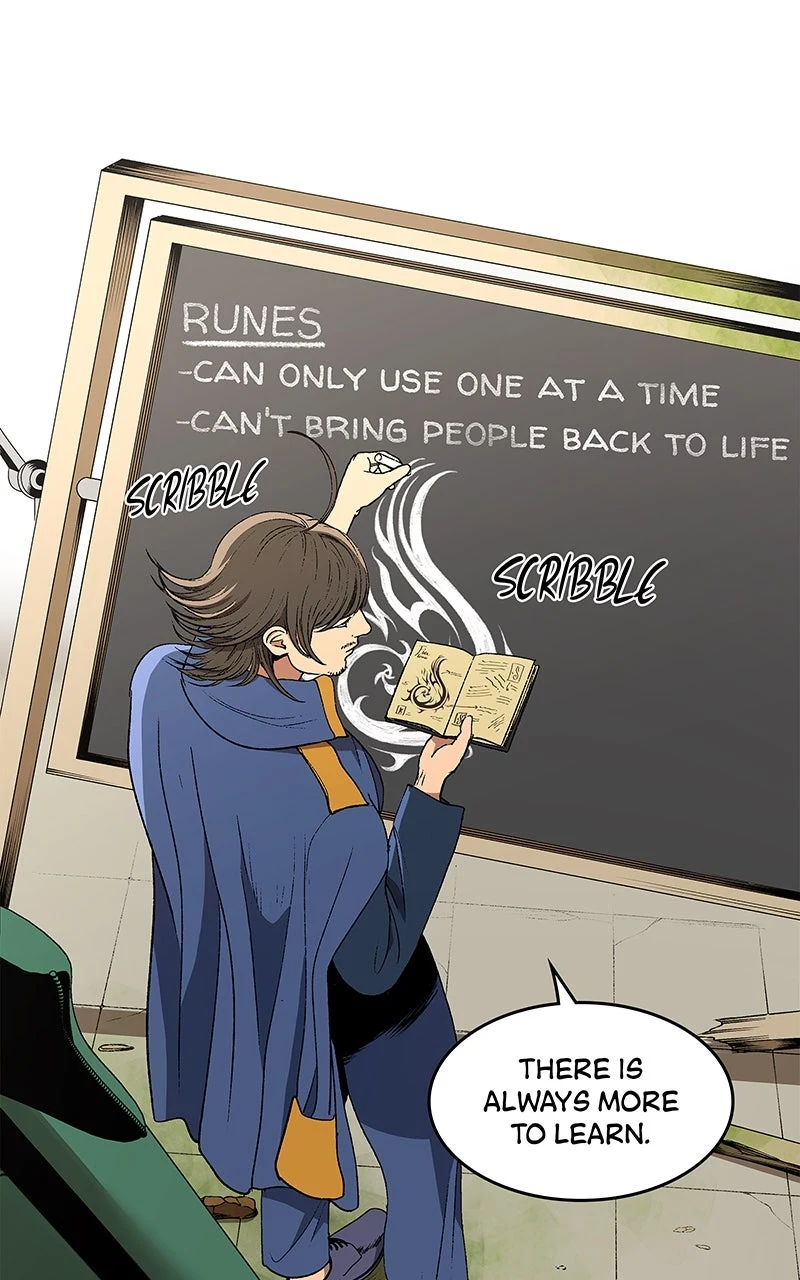
Episode 3 puts Noah in front of two students, Isabel and Todd. Neither has much reason to respect Vermil. Instead of revealing his ignorance, Noah turns basic questions about runes into a lesson about whether the students actually understand what they use.
The scene works on two levels. The students have to examine assumptions, while Noah quietly collects the information he needs. His apparent authority is partly a bluff, but the teaching method has value. That tension is more engaging than a lecture delivered by an expert who already knows everything.
If the academy premise brought you here, read through episode 3 before deciding. The first two episodes focus on Noah’s arrival and survival; the classroom is where his teaching background starts to shape the story.
Rune magic makes questions matter
The opening lesson connects runes with stored energy, control and different qualities of power. It leaves room for uncertainty instead of presenting every statement by a student as an absolute law. Noah’s own experience already gives him reasons to question parts of what he hears.
Noah learns alongside the reader, so his questions do much of the work of explaining the magic. His music background also connects to the idea of combining runes, giving his former profession a purpose beyond his ability to manage a classroom.
The limitation is that explanation takes space. Readers who want rapid contests and constant power upgrades may find a classroom conversation slow. Readers who enjoy seeing a character reason through an unfamiliar system are the better fit.
Repeated deaths change the stakes
The first two episodes establish that death does not function normally for Noah. His encounters with creatures in the forest become a process of noticing movements and learning from failure. Progress comes through observation, not just a sudden increase in strength.
That setup offers a satisfying problem-solving loop, but it also changes how immediate danger feels. A reader who needs every fight to carry a straightforward risk of permanent death may be less invested. The more interesting pressure shifts toward what Noah can learn, what his condition means and how long he can keep his new identity from being exposed.
The vertical format favours reactions and pauses
The opening uses long spaces between images to stretch out Noah’s disorientation and the waiting that precedes his new life. That suits the eerie premise, though it makes the first episode a slower scroll than the title’s academy promise might suggest.
Once Noah reaches the classroom, facial reactions become more important. His outward composure and private alarm can sit close together on the page, allowing the reader to see the bluff while the students hear a confident teacher. The board and visible rune drawings also give the explanation something concrete to look at.
Comic or novel: choose the format you want
The WEBTOON version presents the story through artwork, dialogue and scrolling pace. Actus’s original is prose. If you want the visual character comedy and rune demonstrations discussed here, start with the comic. If you prefer a prose reading experience, use Actus’s official Aethon author page to find the published books.
Do not assume that comic episode 3 equals novel chapter 3. Adaptations can rearrange or divide scenes differently. The printed Volume 1 graphic novel listing is another comic format, not the prose novel with a different cover.
Who should read it?
If you want a student tournament from the start, a romance-led premise or a completed comic to binge, this opening is not a good match. The official comic is ongoing.
The opening contains bloody injury, repeated deaths, swearing and discussion of Vermil’s misconduct toward students. Its school setting does not make it a gentle classroom comedy. For other approaches to the academy setting, compare the different premises in our academy manhwa guide.