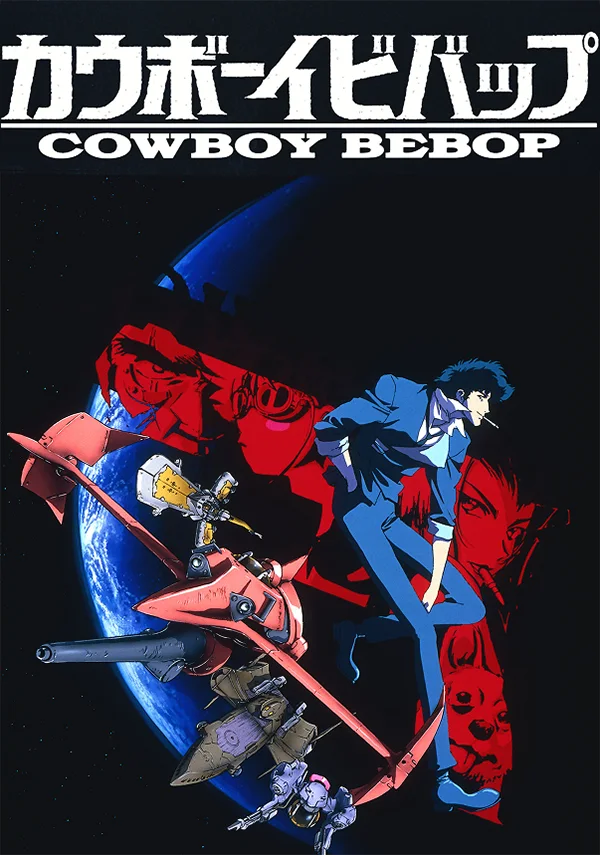
Cowboy Bebop is worth watching if you enjoy self-contained stories, sharp character acting and a little sadness underneath the jokes. Its biggest hurdle is also its defining choice: the crew can spend an episode chasing a bounty without moving a central mystery forward. Go in expecting a tightly serialized adventure and that rhythm may frustrate you. Go in curious about the people they meet, and the detours have a purpose.
This review covers the original 1998 anime, with early-episode examples and no ending spoilers. The 2021 live-action adaptation is a separate production.
The quick verdict
Scroll across to compare all columns →
| What matters | What to expect |
|---|---|
| The appeal | Space bounty hunting with crime-film moods, dry humor and a memorable musical identity. |
| The commitment | 26 television episodes. The animated movie is optional for a first watch. |
| The sticking point | Loose plotting between personal-history episodes; the story rarely explains every feeling aloud. |
| Best fit | Viewers who like flawed adults and an episode that leaves something to think about. |
| Content | Gun violence, drug use, sexual material and bleak situations. This is adult-oriented animation. |
What is Cowboy Bebop about?
Spike Spiegel and Jet Black travel aboard the Bebop, pursuing wanted criminals for money. Faye Valentine, the hacker Ed and the dog Ein add more personalities to an already awkward working arrangement. Space travel has become ordinary; keeping yourself fed is still a problem.
That last detail gives the premise its bite. A successful chase does not necessarily mean a comfortable life. These people can be talented at their jobs and terrible at making those talents pay. Their ship feels less like the headquarters of a heroic team than a shared home whose occupants keep getting on one another’s nerves.
You do not need a glossary of planets or technology before starting. The immediate situations are familiar: someone owes money, someone is running away, someone wants a second chance. The science-fiction setting makes room for those stories without turning every conversation into a lesson about the universe.
Why the quieter episodes matter
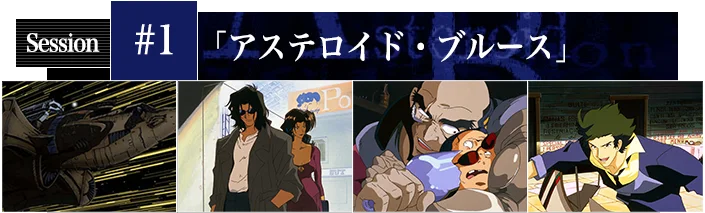
The opening stretch is a useful test of the show’s range. “Asteroid Blues” introduces a drug-related bounty with a grim edge. “Stray Dog Strut” pivots toward a chase involving a stolen dog. “Honky Tonk Women” brings a casino scam into the mix. These are different kinds of trouble, rather than successive rounds of the same tournament.
That variety makes the supporting characters valuable even when they appear briefly. A person can matter because of a choice made during one encounter; they do not need to become a recurring villain. It also means an episode that barely changes the crew’s destination can still change your understanding of the world they live in.
There is a cost. If the only question keeping you watching is “What happens to Spike’s main storyline next?”, some of the series will feel like waiting. Calling every detour filler misses its purpose, but you do not have to enjoy that purpose. The preference is worth recognizing early.
The style works because it carries the mood
Shinichiro Watanabe’s direction and Yoko Kanno’s music give Cowboy Bebop a strong sense of timing. The brassy opening, “Tank!”, makes an immediate promise of energy and confidence. The series has room for other textures too: a joke can interrupt the cool pose, and a quiet passage can take the excitement out of a confrontation.
The useful thing to watch is the gap between how a character presents themselves and what the scene reveals. Spike’s relaxed posture suggests someone who has everything under control. Putting that attitude beside a messy job creates humor without needing him to announce a punchline. Faye’s confidence has a similarly practical function: looking unbothered can be part of getting through the day.
For a first-time viewer, this makes Cowboy Bebop accessible in an unusual way. You can follow a great deal through movement, expression and the atmosphere of a room. You are also expected to notice those things. Background viewing will flatten a show that often puts its emotional information between lines of dialogue.
Where it may lose you
The tone can move from ridiculous to harsh with little cushioning. A viewer enjoying the shipboard bickering may find the more violent stories a shock. Someone arriving for the darker material may have less patience with the broad comedy. Neither side disappears permanently.
The crew is not an instantly comforting found family, either. These people withhold information, act selfishly and leave one another guessing. Their shared space is appealing partly because closeness is difficult for them. If you want open conversations that settle every emotional question, this is a demanding version of companionship.
Try the first five episodes in sequence if you are undecided. That reaches “Ballad of Fallen Angels,” which makes the personal stakes more visible. It is a useful sampling point, not a promise that episode five will reverse your taste.
How to start, and where the movie fits
Start with television episode one and follow the 26-episode order. You do not need a manga, the live-action series or the movie first. For a first watch, finishing the TV series before trying the animated film keeps the decision simple. The film is another adventure with the crew, not a sequel that resolves the television ending.
If you prefer chronological placement, Cowboy Bebop: The Movie fits between TV episodes 22 and 23. Watching it there is optional; saving it until after episode 26 follows the film’s later release and lets the TV run keep its momentum.
Where to watch Cowboy Bebop
Watch Cowboy Bebop on Crunchyroll. This is the original anime. Check regional availability, audio options and subscription requirements before signing up.
Who should give it a chance?
Choose Cowboy Bebop when you want a show whose episodes have their own flavor and whose adults carry problems that a better weapon cannot fix. Its appeal depends less on surprise power upgrades than on how people behave when their plans fall apart.
If you would prefer a fantasy adventure with a more continuous central plot, the Fullmetal Alchemist watch-order guide explains where to begin. For a lighter-looking action comedy with its own tonal turns, our Scissor Seven review will help you judge the fit.
For a more tightly connected psychological fantasy, our Re:Zero season-one review looks at a very different kind of troubled lead. Its repeated crises offer suspense, but they are a heavier commitment than an occasional bounty-hunting detour.