Re:Zero is worth trying if you enjoy psychological fantasy, mysteries and a protagonist who has to confront his own worst habits. It is a harder recommendation if you want a confident hero, steady victories or an easy escape after a rough day. Much of its appeal comes from watching an apparent advantage become an emotional burden.
This review focuses on the first anime season, including the same main story presented in the Director’s Cut. It discusses the opening premise and broad character dynamics, while keeping major reveals and later-season developments out of the way.
What is Re:Zero about?
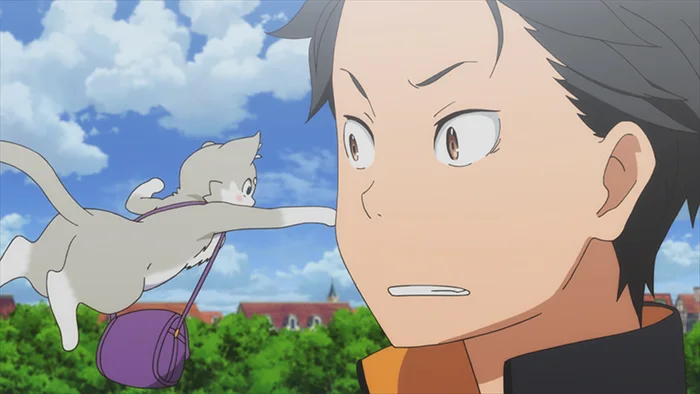
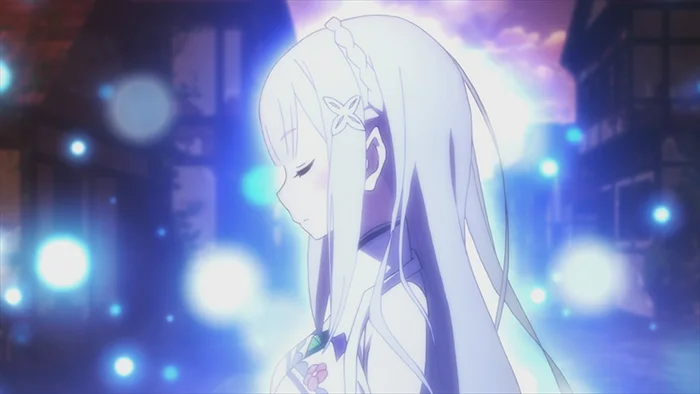
Subaru Natsuki is transported from ordinary life into a fantasy world. He meets a silver-haired girl and tries to help her, approaching events with the confidence of someone who thinks he understands the genre he has landed in.
Then he discovers Return by Death: after dying, he finds himself back at an earlier point, carrying memories other people do not share. It sounds useful until you consider what using it requires. Information can survive a failed attempt; the pain of that attempt is not simply erased for Subaru.
The anime adapts Tappei Nagatsuki’s light novels, with animation by WHITE FOX. Its central question is more interesting than “Can he try again?” It is what he learns from trying, and whether he can change his behavior rather than merely repeat it.
Why the time-loop premise works
The strongest part of Re:Zero’s setup is the unequal knowledge between Subaru and everyone around him. A conversation can carry enormous weight for him while being an ordinary first meeting for the other person. Trust that felt earned may no longer exist. He has to deal with people as they are now, even when he remembers a different version of their relationship.
That makes repetition useful dramatic material. A changed reaction or a missing detail can turn a familiar scene into a question. The audience has a reason to pay attention beyond waiting for the next attack.
There is a tradeoff. When you already understand the immediate danger, another return to the same problem can feel exhausting. The show asks you to stay interested in Subaru’s emotional response as well as the mechanics. If only the puzzle interests you, the longer stretches of distress may feel like a detour.
Subaru is the attraction and the obstacle
Subaru can be loud, presumptuous and painfully bad at recognizing when his help is unwanted. His wish to be useful is tangled up with wanting to be recognized as useful. That distinction gives the character somewhere to grow, but it also makes spending time with him uncomfortable.
It helps to separate understanding a character from approving of him. Re:Zero’s dramatic tension often comes from the gap between Subaru’s image of himself and what other people actually need. A good intention does not automatically excuse the way he acts on it.
The risk is that viewers may run out of patience before that friction becomes rewarding. “He is supposed to be frustrating” explains a creative choice; it does not oblige anyone to enjoy the experience. If his behavior is your main obstacle, look for whether the story is challenging it. If the whole emotional register wears you down, forcing another dozen episodes is unlikely to help.
The supporting cast gives his choices consequences
Emilia, Rem and the people around the mansion matter because Subaru cannot solve their relationships as though they were a menu of correct dialogue choices. They have their own fears, loyalties and limits. The story is more compelling when he has to listen than when he assumes that knowing more means understanding more.
Episode 5 of the original season makes that gap concrete. Subaru has settled into work at the mansion and arranged a date with Emilia, then finds himself back at the start of his stay. Repeating the chores cannot restore a shared promise when only he remembers making it. The loop takes away something ordinary and personal, which is why the quieter conversations matter as much as the danger.
The cast also provides relief from his perspective. Warmth and ordinary conversations give you a sense of what he is trying to preserve. Without that quieter material, repeated danger would have much less emotional weight.
Still, viewers who dislike romantic fixation or heightened declarations should know that those elements remain part of the experience. This is an emotional fantasy drama with suspense, not a detached logic puzzle.
How dark is it?
Expect graphic violence, death, fear and severe emotional distress. The friendly character designs and occasional comedy can make the harsher turns feel particularly abrupt. This is not a family-viewing recommendation.
The fantasy adventure and horror elements pull in opposite directions in a productive but demanding way: the world offers connection, then makes safety uncertain. That tension is a strength if you want an intense story. It can also make Re:Zero a poor choice for a relaxed binge.
When does Re:Zero get good?
Try the first three episodes of the original season, or the first two of the Director’s Cut. That covers the opening Insignia storyline and gives the first problem time to unfold. It is a useful stopping point to ask whether the repeated events, limited knowledge and emotional cost interest you, rather than judging only the initial burst of isekai comedy.
There is no universal episode after which everyone suddenly enjoys it. Episode 18, “From Zero,” is a notable character-focused point in the original season’s numbering, but it is not a sensible place to start or skip to. Its context matters. If you dislike the basic cycle of suffering, reflection and renewed effort, a later milestone does not change the show’s underlying appeal.
Original season or Director’s Cut?
The original first season has 25 episodes. The Director’s Cut reorganizes that story into 13 longer episodes, so episode numbers do not line up directly. It is a version of season 1, not a sequel you need to watch after it.
Start at episode 1 of whichever official version is available to you, then continue with season 2. Do not alternate between versions based on matching episode numbers. Side stories and specials can wait until you have a feel for the main cast; they need not turn your first watch into a scheduling exercise.
Official trailer and where to watch
Watch Re:Zero on Crunchyroll. Check the season selector for the original season-one release or Director’s Cut, along with regional availability, audio options and subscription requirements.
The verdict
Re:Zero’s first season has a strong reason for making its hero struggle: knowledge alone does not make someone considerate, capable or trustworthy. That gives the time-loop device something to do beyond delivering surprises.
Try it for the tension between a clever premise and a messy person. Pass, or save it for another mood, if prolonged distress and an abrasive lead are exactly what you do not want. Its strengths are closely tied to the same choices that make it difficult to recommend to everyone.