Jujutsu Kaisen is worth watching if you want supernatural fights with clear tactical problems, a sharp sense of humour and increasingly harsh consequences. It is a less comfortable choice if your favourite part of an ensemble anime is spending unhurried time with the cast. The battles and escalating emergencies often take priority over that downtime.
This review focuses on what the first two seasons offer a new viewer, with a short guide to the later continuation. It discusses the opening premise and changes in tone, without revealing major deaths, battle results or the manga ending.
Who will enjoy Jujutsu Kaisen?
- Watch it for: close-range combat, unusual abilities, dark supernatural threats and characters who have to think under pressure.
- Consider another series first if: you want gentle school adventures, straightforward power rules or a story that regularly pauses to let its characters recover.
- Try first: season 1, episodes 1 to 3. They establish the premise, the core students and the mixture of comedy and danger.
What is Jujutsu Kaisen about?
Yuji Itadori is a physically gifted teenager who becomes entangled with a dangerous cursed object. His decision to protect others brings him into a hidden world of sorcerers and curses, and leaves him sharing his body with Sukuna. Training at Tokyo Jujutsu High offers a way forward, but it does not make his situation safe.
The useful distinction is that curses are connected to human negativity. The enemies are not simply creatures waiting in a dungeon. Fear, cruelty and the way people treat one another sit close to the action. That gives Yuji’s wish to help people something difficult to push against.
Why the fights are the main attraction
The best way to understand the appeal is to look at the problems a fight creates. An opponent may be too strong to confront directly, have an unfamiliar technique or place someone else in danger. Winning then depends on timing, positioning and figuring out what the other person can do. Raw strength matters, but it is rarely the only thing worth paying attention to.
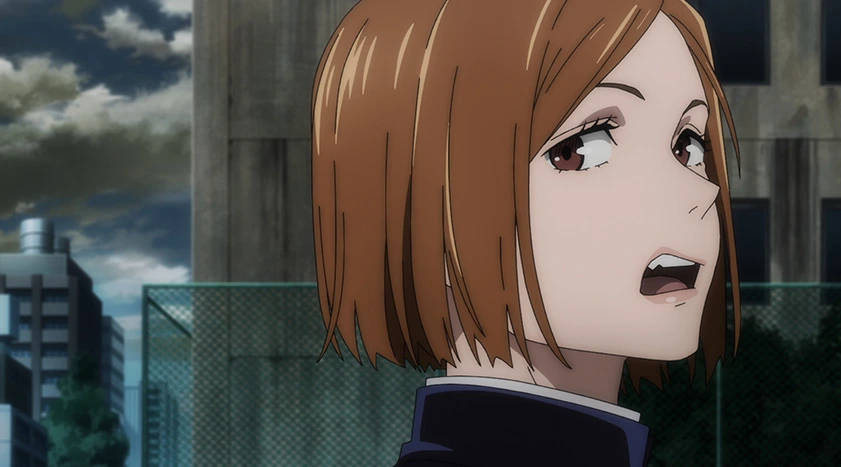
Episode 3 offers an accessible example. Yuji and Nobara are sent into an abandoned building, where a curse uses a child as a hostage. The important question is not just whether the students can hit it hard enough. Their choices must also protect someone who cannot defend himself. You get character information through the problem they are asked to solve.
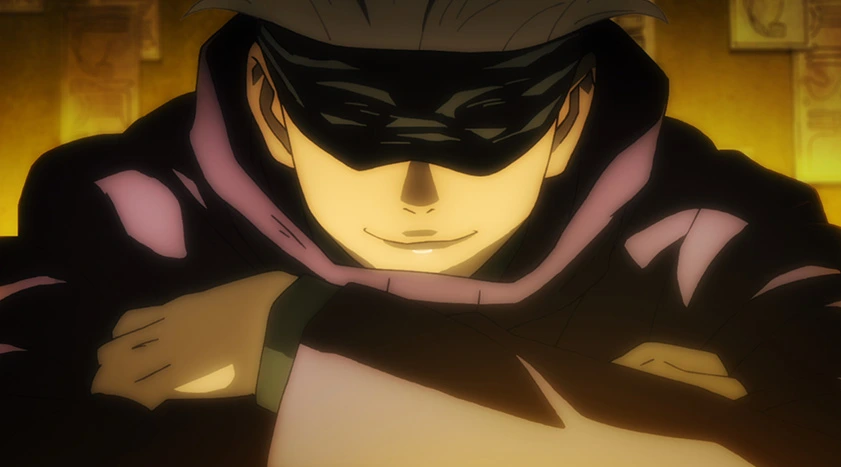
Gojo’s encounter with Jogo in episode 7 illustrates a different pleasure: a mismatch in power becomes an opportunity to understand the system. Bringing Yuji into that situation makes the explanation part of their teacher-student relationship. If you like watching an ability become understandable through a demonstration, this is one of the show’s strengths.
The trade-off is terminology. Cursed energy, techniques, barriers and domains do not all mean the same thing. Later encounters can ask you to absorb a rule while action is still moving. You do not need to memorise a glossary before starting, but this is a series that benefits from attention rather than background viewing.
The characters work best when personality affects a decision
Yuji’s directness gives the story a useful centre. He wants to act when somebody needs help, which becomes complicated in a world where acting quickly can make things worse. Megumi is more guarded, while Nobara brings a forceful sense of self. Their differences make the early group more engaging than three students who react to danger in the same way.
The humour helps establish that contrast. Gojo can be irritating as well as impressive, and the students have opinions beyond their immediate mission. Those lighter exchanges are valuable because they make the darker turns feel like something happening to people, rather than a sequence of escalating monsters.
However, the expanding cast competes for space. If a supporting character becomes your main reason to watch, the story may move away from them before you feel satisfied. That is a real limitation of the experience. A memorable introduction does not guarantee equally substantial development for everyone.
How the seasons change the experience
Scroll across to compare all columns →
| Part | What to expect | What that means for a new viewer |
|---|---|---|
| Season 1 | Training, missions and student rivalries alongside horror. | The clearest place to learn the cast and basic rules. |
| Jujutsu Kaisen 0 | A prequel centred on Yuta Okkotsu. | A different lead, with useful background for the wider story. |
| Season 2 | Hidden Inventory / Premature Death, followed by the Shibuya Incident. | A change in period and perspective, then a much more sustained crisis. |
| Season 3 | The Culling Game continuation. | Continue in sequence; it is not a fresh starting point. |
Season 2’s structure is important to the recommendation. Its opening looks back at younger versions of established adults before returning to the main timeline. The later Shibuya material gathers characters into a prolonged emergency. That creates momentum, but it also means less room for the everyday interactions that made the early group easy to like.
If you enjoy rising pressure and interconnected confrontations, that shift can be a reason to continue. If you mainly want the first season’s school-based balance, expect a rougher experience. The series becomes darker; it does not settle into a reassuring cycle of lessons and successful missions.
The official episode guide now lists three seasons. The season 3 entry above identifies the continuation, rather than offering a verdict on every later episode.
Age rating and content to consider
Do not treat the school setting as a sign that this is suitable for young children. Expect bloody injuries, distorted bodies, threatening imagery, death and cruelty towards vulnerable people. Some scenes are disturbing because of what is happening to a person, not simply because a fight is violent.
Check the rating and content advisories on the service available in your country. A film classification or a manga age label is not automatically the rating for every season of the television anime.
Where to start and where to watch
For a first watch, follow season 1, Jujutsu Kaisen 0, season 2, then season 3. The film tells Yuta’s prequel story and is not a recap. For flashbacks and optional compilation releases, use our Jujutsu Kaisen watch order. It separates new story from repeated material without making you reconstruct the chronology yourself.
Watch Jujutsu Kaisen on Crunchyroll. Check the season selector, language options and subscription requirements in your region before signing up. A title page does not guarantee that every release is available in every country.
The first two seasons contain 47 television episodes: 24 in season 1 and 23 in season 2. The film is additional viewing. Season 2 is not the end of the anime, so this is not a self-contained, completed series.