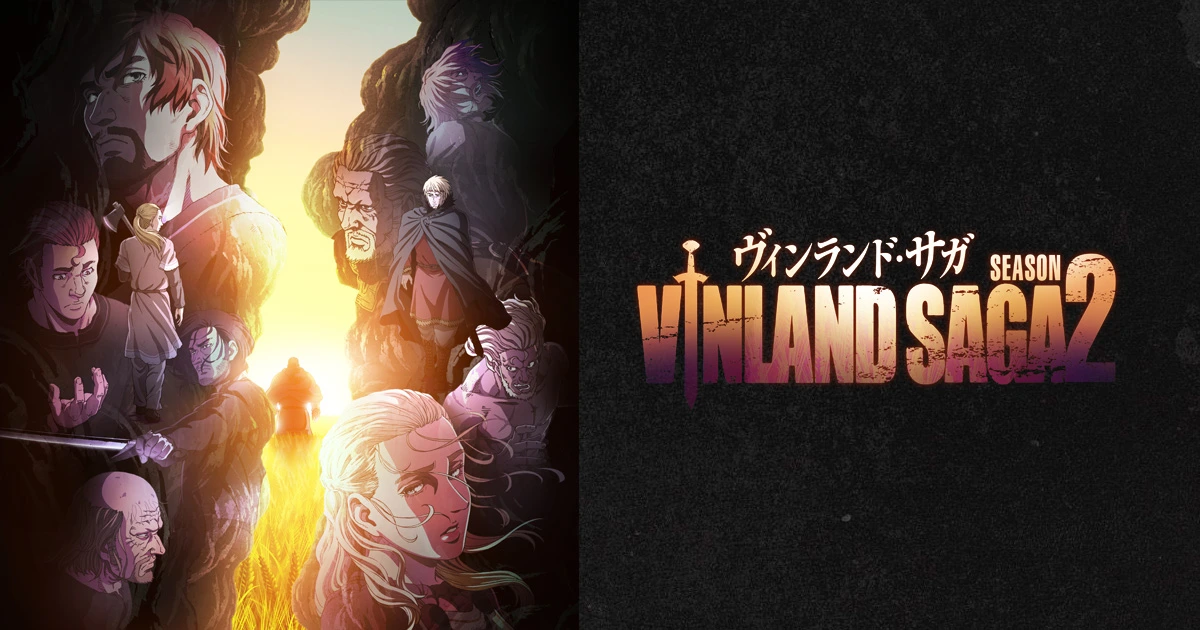
Vinland Saga is worth watching for its character drama and its examination of what violence does to a life. Season 1 offers revenge, warfare and political manoeuvring. Season 2 slows down and makes the aftermath harder to look away from. If you want a Viking action series that keeps escalating its battles, that change matters before you commit.
This review compares the first two anime seasons. It discusses their starting situations and broad themes, including the farm setting of season 2, without revealing their endings or the outcomes of major confrontations.
Who should watch Vinland Saga?
- A strong fit: viewers who want a protagonist to change, enjoy morally difficult choices and are comfortable with a story questioning the excitement of its own battles.
- A weaker fit: viewers looking for constant fights, light escapism or an uncomplicated hero whose growing strength solves most problems.
- Start here: season 1, episode 1. The childhood material establishes values and relationships that remain important after the setting changes.
Watch our Vinland Saga review
What is Vinland Saga about?
The story follows Thorfinn, whose life becomes consumed by revenge amid warfare and competing ambitions in the Viking age. It begins with the attraction and brutality of a warrior’s world, then asks what remains when fighting can no longer provide a useful purpose.
It is historical fiction adapted from Makoto Yukimura’s manga, not a documentary. The historical setting gives the conflicts weight, but dramatic feats and fictional character development should not be treated as evidence of how every historical person behaved.
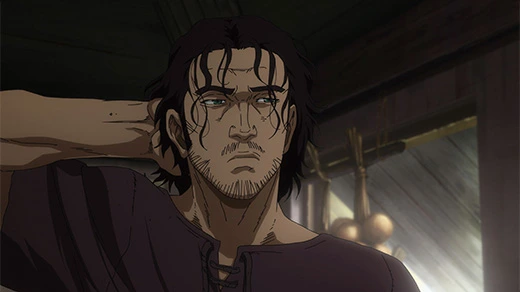
Season 1: revenge creates momentum, but narrows a life
Revenge provides an immediately understandable objective. It gives Thorfinn something to pursue through dangerous circumstances, which makes the early story easy to follow even when political interests become more complicated. You can understand what he wants before you understand everyone else’s plans.
The more interesting question is what that objective prevents him from seeing. A life organised around one enemy leaves little room for other relationships or another future. That tension gives the action a purpose beyond demonstrating who is strongest. Progress towards a confrontation can still represent a person becoming more trapped.
Askeladd is central to that discomfort. His pragmatism and ability to read a situation create a different kind of power from physical force alone. An unpredictable adult making calculations around a single-minded young fighter produces friction even when neither is in battle.
The limitation is that Thorfinn’s fixation can be exhausting. Viewers looking for frequent breakthroughs or a quickly maturing lead may become impatient. The political material and the people around him therefore matter: they provide perspectives his anger does not allow him to hold for long.
Why is Vinland Saga season 2 so slow?
Season 2 changes the immediate problem. Thorfinn and Einar work as enslaved men on a farm, where cultivating land is tied to the possibility of freedom. Physical effort still matters, but the aim is no longer to defeat a succession of opponents.
The farm work makes time tangible. Clearing land and trying to build something can take far longer than destroying it. That gives the slower pace a concrete function: the characters cannot solve their circumstances through one impressive performance. Relationships, recovery and dependence on other people’s decisions become central.
It also changes what a scene needs to communicate. A conversation or a failure to respond can reveal a person’s condition without a duel explaining it. In an official production interview, director Shuhei Yabuta describes the second season’s increased focus on the characters’ inner worlds. The shift is built into the adaptation’s approach.
That does not make impatience an invalid response. Repeated labour, reflection and delayed decisions ask for sustained attention, and some viewers will miss the mobility and immediate danger of the first season. The strongest reason to continue is interest in how these people change, not a promise that another fight is always just around the corner.
Seasons 1 and 2: what changes for the viewer?
Scroll across to compare all columns →
| Aspect | Season 1 | Season 2 |
|---|---|---|
| Main source of momentum | Revenge, travel, warfare and political calculation. | Labour, relationships, recovery and decisions about a future. |
| Rhythm | More movement between conflicts and locations. | Longer stretches in one environment, with gradual changes. |
| What to pay attention to | What people want from Thorfinn and what his anger excludes. | What he can learn to value and how he responds to other people. |
| Main viewing reservation | A lead whose fixation can be wearing. | A pace that can test viewers seeking frequent action. |
Season 2 is not filler, and skipping it removes the continuation of the character story. Nor is it a replacement starting point. Knowing where Thorfinn has come from changes the meaning of his behaviour on the farm.
Why Einar matters to the second season
Einar brings needs and reactions that Thorfinn cannot simply absorb into his own revenge story. Working beside someone makes avoidance harder: there are shared tasks, consequences and reasons to talk. This is a different pressure from being confronted by an enemy.
The value of that relationship is its practical setting. Trust has something to attach itself to when people must cooperate, rather than appearing only because the dialogue announces that they understand each other. The work does not erase what either person has experienced, and the unequal system around them still limits their choices.
That is where the series becomes most useful as a recommendation for character-drama viewers. Change is not presented as a new fighting technique. It has to affect what someone does with an ordinary day and how they treat a person standing next to them.
Music supports the change in tone
The score’s role becomes especially relevant in season 2 because more of the drama concerns what a character cannot easily say. The production team’s interview describes building music around emotion rather than simply matching visible action, including the use of piano to punctuate feeling.
Listen to what the score adds during a pause in conversation. A character may say little while the music brings their unease or hesitation into focus. This gives the quieter scenes another way to express what the dialogue leaves unsaid.
How violent is Vinland Saga?
Expect bloody warfare, killings, slavery, abuse, cruelty towards civilians, grief and trauma. The farm setting does not turn season 2 into a gentle farming show. Its threats often concern how much control powerful people have over someone else’s life.
Netflix’s Vinland Saga listing shows a TV-MA rating in the US presentation checked for this article. Use the rating in your own region when deciding for younger viewers. The mature themes matter alongside the visible violence.
Where to watch, and how much time to set aside
Watch Vinland Saga on Netflix, where the title page lists two seasons. Availability, subtitle options and dubbing can vary by country, so check both season listings before subscribing.
Follow season 1 with season 2. Each of the first two seasons has 24 episodes, giving you 48 episodes and roughly 20 hours in total at normal playback. A few episodes make a more manageable first commitment than planning a complete binge. Keep the opening childhood episodes: they establish the contrast between the life Thorfinn is offered and the one he pursues.
The anime’s second season does not adapt the entire manga. If a completed adaptation is essential to you, take that into account before starting. For viewers comfortable following an unfinished larger journey, the first two seasons provide a substantial change in perspective rather than merely setting up a larger enemy.