Release That Witch is worth trying if you enjoy fantasy about building a functioning society. Its early appeal comes from turning knowledge and magical abilities into things a town can use. It is a less natural choice if you mainly want rapid duels, combat rankings or a romance that dominates every chapter.
This spoiler-light review covers the opening chapters of the manhua, including Anna’s introduction and the first cement project. It assesses whether the setup is worth your time, without revealing later outcomes.
Scroll across to compare all columns →
| What you want | How the comic fits |
|---|---|
| Kingdom building with practical problems | A strong opening hook: construction, resources and public needs give magic a purpose |
| A lead who begins on equal terms with everyone else | A weaker fit: Roland brings modern knowledge and royal authority |
| Visual, approachable exposition | Color, diagrams and comic reactions help explain the setup |
| A short finished story | Not a short read; the completed Webnovel comic catalog spans hundreds of entries |
Watch our Release That Witch review
What is Release That Witch about?
A modern engineer wakes as Roland Wimbledon, the fourth prince, in the middle of a public execution. He must respond as a ruler before he understands either the occasion or the world around him. The opening works because it gives him an immediate decision. You learn about the setting through a problem rather than a long history lesson.
The royal succession contest then gives his position a clear shape. The king’s children have five years to demonstrate their ability to govern their assigned territories. Roland sees the mismatch between his siblings’ advantages and his own situation in Border Town. Money, military power and manpower are already unevenly distributed.
The comic presents those differences with playful comparison graphics and exaggerated reactions. It is an efficient introduction, though the strategy-game humor also tells you what kind of political fantasy this is. Expect an accessible adventure with jokes, rather than a consistently solemn court drama.
Why the kingdom building is the main attraction
The cement sequence in chapter 010 makes the premise concrete. Roland needs a wall built quickly. Carter explains why the available stonework methods cannot meet that timetable. The obstacle is practical: fitting the stones securely takes labor and time.
Roland has an idea for a different material, but remembering that cement exists does not solve everything. He cannot recall the precise temperature he needs, and the town lacks reliable ways to control or measure it. Anna’s fire becomes part of overcoming that obstacle. Her power matters because it enables production, not simply because it can hurt an enemy.
You can follow the invention without knowing how to make cement. Carter identifies the building problem, Roland proposes a material, and Anna supplies the heat. Each person has a distinct part in the result.
The scene also reveals a shortcut. The move from experimental production to a successful test happens quickly. Readers hoping for detailed accounts of failed batches, standards and construction management may find the process too convenient. The story uses recognizable technical problems to support a fantasy of progress; it is not a rigorous industrial simulation.
After the test, Carter imagines an enormous wall. Roland talks instead about replacing vulnerable homes with stronger ones. That choice is more revealing than another claim that he is clever. It shows what he thinks governing should accomplish for people who live in the territory.
Roland and Anna: a useful partnership with an uneven balance
Roland is most engaging when he asks the right question. In Anna’s first fire demonstration, a guard sees a threat while Roland sees something he wants to understand. The contrast makes prejudice visible without stopping the action for an abstract argument.
Anna’s response gives the encounter emotional weight. She expects very little kindness from the people holding power over her. A job offer therefore changes more than her immediate circumstances: it suggests that her ability might give her a place in society instead of condemning her.
There is a worthwhile tension in Roland’s response. Seeing a person’s usefulness can challenge prejudice, but usefulness is not the same thing as unconditional respect. The opening puts those ideas close together. Anna supplies something Roland cannot reproduce with a remembered blueprint, yet he still has the authority to decide how it will be used.
Roland still makes most of the decisions and explains most of the plans. Readers who want Anna to have equal control over events may find that frustrating. Her contribution matters, but the opening is told mainly through his ambitions.
Is romance the main focus?
Tapas tags Release That Witch as harem as well as transmigration. That is worth knowing if multiple romantic interests are a deal-breaker. In the opening chapters discussed here, the more immediate relationship is a working partnership: Roland needs Anna’s ability, while she needs safety and a place in the town. Choose it for the kingdom building first, rather than expecting a couple-centered romance.
Artwork and pacing: clear explanations, broad comedy
The artwork is effective when it gives different ideas different visual treatment. The prison sequence uses orange fire against cold stone and dark bars. The wall discussion includes a dimension diagram. The succession contest turns personalities and resources into comic comparisons. Those choices reduce the amount of explanation that has to sit in dialogue.
Exaggerated faces and small comedy figures keep the tone light. They can also interrupt the atmosphere of a serious conversation. Whether that is charming or distracting depends on how much tonal switching you enjoy.
Vertical spacing creates pauses before reactions and reveals. On a phone, you control those pauses, but some exchanges require considerable scrolling for a modest amount of new information. If the practical discussions already feel like obstacles between action scenes, the comic’s central appeal probably does not match what you want to read.
The opening includes threatened execution, imprisonment and persecution. Its bright colors and jokes should not be mistaken for an entirely gentle story.
Is the Release That Witch manhua finished?
Webnovel labels its comic edition Completed. At the time of checking, the catalog contained 698 entries and ended with numbered chapter 695, “Return Home.” The platform entry number and the printed chapter number are therefore not identical.
The comic edition is complete, but that does not establish that it adapts the novel in full. This opening-chapter review does not assess the ending.
Should you choose the manhua or the novel?
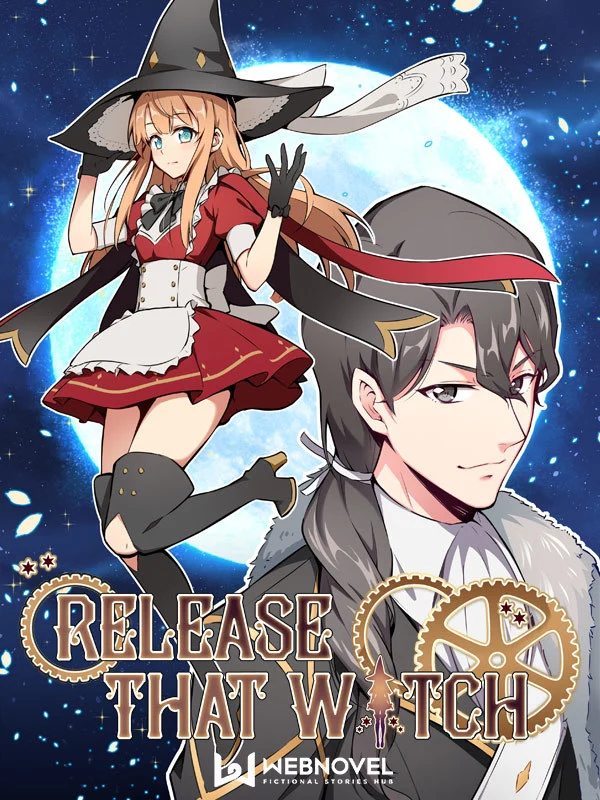
Choose the manhua for its visual explanations and broad comedy. Art by Yeqing/Kalin turns Er Mu’s premise into colorful, often playful scenes. Er Mu’s original novel is the alternative if you prefer prose to reaction panels and scrolling artwork.
Do not jump to an identically numbered novel chapter after reading the comic. Adaptation chapters can divide events differently. Start the novel at the beginning if you want to avoid an uncertain handoff, or compare the last scene you recognize before continuing.
Where to read Release That Witch in English
Read the Release That Witch comic on Webnovel. Select the comic listing, not the separate novel. An opening sample is available, while later chapters have access requirements. Check the current unlock conditions before buying for a long binge.
Tapas has announced that its edition will leave sale on October 31, 2026, at 5 PM Pacific Time. Previously purchased episodes remain accessible through the app’s transaction history under its notice. See the Tapas series notice if you already own episodes there. Webnovel is the more useful starting link for a new reader.
For a practical trial, begin at chapter 001 and read through Anna’s introduction and the first cement project. Together they show the story’s humor, its treatment of witches and its approach to invention. Continue if the changing town interests you as much as Roland’s personal success.