Start with the Tokyo Ghoul manga if you want Kaneki’s full story with fewer gaps in the characters’ motives. The anime is still worth trying for its performances, music and unsettling atmosphere. The biggest complication comes after Season 1: Root A changes the story’s route, and the move into :re can leave anime-only viewers struggling to follow what happened.
If you have already watched the anime, use the starting-point table below to choose your next book. This comparison avoids ending spoilers and places one early Root A difference inside a labeled spoiler box.
Which version should you choose?
Scroll across to compare all columns →
| Your situation | Best starting point | Why |
|---|---|---|
| Completely new to Tokyo Ghoul | Tokyo Ghoul manga, Volume 1. | The original sequence gives motivations and relationships room to develop. |
| Prefer watching to reading | Tokyo Ghoul anime, Season 1. | A compact introduction with music and performances, provided you accept later adaptation changes. |
| Finished anime Season 1 | Volume 1 for full context; Chapter 67 in Volume 7 for a shorter continuation. | The season ends around Chapter 66, but changes or omits earlier material. |
| Finished Root A or became confused by :re | Read the original manga before the :re manga. | Root A is not a reliable replacement for the original manga’s later volumes. |
| Finished all 14 original manga volumes | Tokyo Ghoul:re, Volume 1. | This is the manga sequel, not an optional retelling. |
Watch our Tokyo Ghoul comparison
Prefer to watch? Our nine-minute video compares the two versions and explains where to start reading after the anime, without revealing the ending.
The manga and anime versions, explained
Sui Ishida’s manga has two main series: Tokyo Ghoul, then Tokyo Ghoul:re. VIZ’s complete sets contain 14 volumes of the original and 16 volumes of :re. Both are complete. That is 30 volumes across the main story, not 30 volumes in the first series.
The main TV route is Tokyo Ghoul Season 1 → Tokyo Ghoul √A, usually called Root A → Tokyo Ghoul:re. Streaming menus may split :re into two parts. Root A is an anime season, not a separate manga that you need to find between the two book series.
The main anime comprises 48 TV episodes; the official anniversary website lists those separately from the two OVA specials. Allow roughly 19 hours for the TV run at an estimated 24 minutes per episode. Manga reading time depends much more on your pace, so 30 volumes is the more useful commitment to compare.

The main differences between the anime and manga
Scroll across to compare all columns →
| Aspect | Manga | Anime |
|---|---|---|
| Kaneki’s perspective | More space for internal narration, hesitation and self-justification. | Relies more on delivery, framing and a shorter selection of thoughts. |
| Pacing | Longer development, with control over how quickly you read or revisit a scene. | Events and introductions are condensed; :re can feel especially crowded. |
| Story route | One continuous original route into the manga sequel. | Root A changes important choices and connections between events. |
| Atmosphere | Panel composition, black-and-white contrast and changes in linework. | Music, color, voice acting and timed reveals. |
| Best reason to choose it | Character context and continuity. | The audiovisual experience, especially as an introduction. |
Kaneki’s inner life is the most important difference
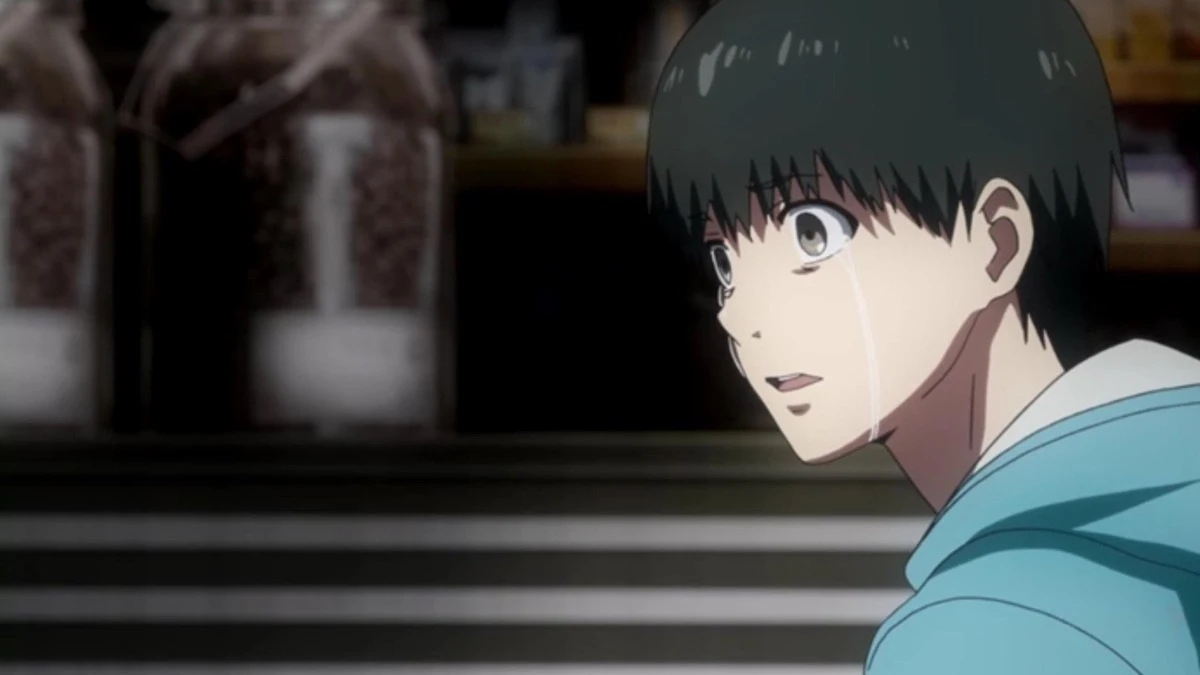
The opening is not just about a student gaining a frightening power. Kaneki has to live in a body whose needs clash with his sense of himself. Familiar food becomes a problem, ordinary social contact becomes risky, and accepting help can feel like admitting he is no longer the person he was.
The manga lets you follow Kaneki’s attempts to justify what he does. His thoughts can contradict his actions, so a scene reveals both his fear and the excuse he makes for it. The anime can communicate panic quickly through his voice and expression, but shorter scenes give less room to those explanations.
Even if you know the premise, Volume 1 lets you compare how each version handles Kaneki’s changed appetite and his reluctance to accept help.
The quieter scenes make the relationships easier to follow
Anteiku is the cafe where Kaneki begins spending time with other ghouls. Away from a fight, he has to ask awkward questions, accept help and learn how they manage everyday life. These scenes give you reasons to care about the group before it faces another crisis.
The manga has more time for those conversations. In the anime, you can recognize everyone in a scene and still feel unsure why a particular relationship matters so much. That difference becomes more noticeable as the cast expands.
The trade-off is length. Reading both series is a larger commitment than sampling the first anime season, and the expanding cast can be demanding in either format. The manga is more complete, not automatically effortless to follow.
What the anime adds
Hearing Kaneki struggle to get a sentence out can make his fear immediate. Music and editing also let the anime turn an ordinary street or cafe into an uncomfortable place before anything violent happens.
That atmosphere is a good reason to try Season 1, even if you plan to read the books afterward. Enjoying the anime does not depend on agreeing with every change it makes.
Is Root A canon, and how does it differ?
If by “canon” you mean a faithful account of the original manga’s sequence, Root A is not a substitute for those volumes. It takes an alternate route through significant decisions while retaining manga-derived characters, confrontations and other material. Calling the whole season unrelated filler would also be misleading.
The official Root A introduction presents it as another version of Tokyo Ghoul. The practical consequence is that remembering a broad outcome from the anime does not mean you have the same motivations or connective events the manga provides.
One early Root A difference: mild Season 2 setup spoiler
In Root A, Kaneki joins Aogiri Tree. In the manga, he takes his own path while investigating the organization; VIZ’s Volume 8 description outlines that direction. Both versions move him away from his earlier life at Anteiku, but his choices are different. Watching one route does not give you all the context for the other.
Why can Tokyo Ghoul:re feel confusing after Root A?
The opening of :re deliberately withholds information about its changed situation. Some uncertainty is part of the story, so do not assume you missed an episode just because the new cast is unfamiliar.
The adaptation adds another problem: it moves quickly through relationships and events whose background was shortened or changed in earlier seasons. You may be trying to follow a new mystery while also missing the reason an old character matters.
The original manga supplies that earlier background. It will not explain every mystery at the start of :re, but it makes the returning characters and their relationships easier to recognize.
Where should you start the manga after the anime?
The complete reading order is Tokyo Ghoul Volumes 1 to 14, followed by Tokyo Ghoul:re Volumes 1 to 16. Choose your starting point based on what you have already read:
After anime Season 1: if you want to move straight into the next part of the story, start at Chapter 67, in Volume 7 of the original Tokyo Ghoul manga. The season finale reaches material from Chapter 66. This is a practical continuation point, not a perfect match between versions: the anime changes the order of events and shortens earlier scenes.
Start at Volume 1 instead if your priority is understanding Kaneki’s relationships and motives in full. Try the publisher’s sample or a library copy before buying volumes whose broad events you already know.
After Root A or the complete anime: read the original manga before starting :re. There is no single chapter after the anime that restores all the earlier changes. Jumping to the sequel would leave those gaps in place.
After reading all 14 original manga volumes: continue with :re Volume 1. You do not need to reread the original series simply because you also watched the anime.
Where to read and watch officially
Begin with VIZ’s Tokyo Ghoul Volume 1 page for a sample and official print/digital purchase options. The VIZ series hub lists the books and reading options. Check regional access and purchase or subscription requirements before choosing a format.
For the anime, check Crunchyroll’s Tokyo Ghoul listing in your region. Confirm which seasons and language tracks are available rather than assuming one catalog entry includes everything worldwide.
Both versions contain body horror, cannibalism, torture and severe violence. Animation is not a reliable way to avoid the disturbing subject matter. The manga can also ask you to linger on imagery that a moving scene passes through quickly.
The verdict: manga first, anime for a different experience
Choose the manga for the fuller account of Kaneki’s story. Choose anime Season 1 if voice acting and music are what draw you into a series. If you later switch formats, use the reading order above instead of treating Root A as a replacement for the books.