Swallowed Star is worth starting if you enjoy training, measurable progress and a protagonist whose ambition has a practical purpose. Luo Feng wants the ability to support his family before he has any reason to think on a cosmic scale. The futuristic setting gives that familiar cultivation premise a different texture: defended cities, military equipment, simulated assessments and employment offers all shape his route forward.
The main drawbacks are a repetitive bully plot, lengthy explanations and stiff early 3D character animation. This review covers the first six episodes of the 2020 donghua, with minor setup spoilers. It is a guide to deciding whether to start, not a verdict on every later arc.
The quick verdict
Scroll across to compare all columns →
| What you want | How the opening fits |
|---|---|
| Training with a visible purpose | A strong fit. Tests, instruction and martial-club benefits connect improvement with concrete opportunities. |
| Science-fiction imagery with cultivation | A strong fit. Cities, monitoring systems and equipment sit alongside extraordinary personal power. |
| A romance-led story | A weaker fit. Xu Xin matters, but Luo Feng’s family and development drive these episodes. |
| Subtle rivals and restrained exposition | Approach cautiously. The bully plot is direct, and the rules receive substantial explanation. |
| A short, completed adventure | Choose something else. This is the beginning of a long-running adaptation. |
A useful trial: watch through episode 6. By then, the story has shown its family stakes, prospective-fighter assessment, early training and transition toward a real field test. That is enough to judge its main ingredients without committing to the entire catalogue.
Watch our Swallowed Star review
What is Swallowed Star about?
Swallowed Star, or Tunshi Xingkong, is a Chinese 3D animated adaptation of I Eat Tomatoes’ novel. Its world has been transformed by the RR virus and mutated creatures. Human communities survive in defended cities, while exceptional fighters can confront dangers that ordinary people cannot.
Luo Feng begins as a student with limited money and an ambition to become a warrior. The opening links that ambition to education and work. A military academy offers one route; qualifying as a fighter offers another. His decision is not simply which power looks most impressive. It is which future he can realistically build.
Expect fantasy powers in a technological setting. The virus, monsters and military equipment establish the world, but martial training and spiritual abilities drive Luo Feng’s progress. Viewers looking for a cultivation story with cities and machinery have more to enjoy here than viewers seeking a scientifically grounded survival drama.
Luo Feng’s family gives the progression meaning
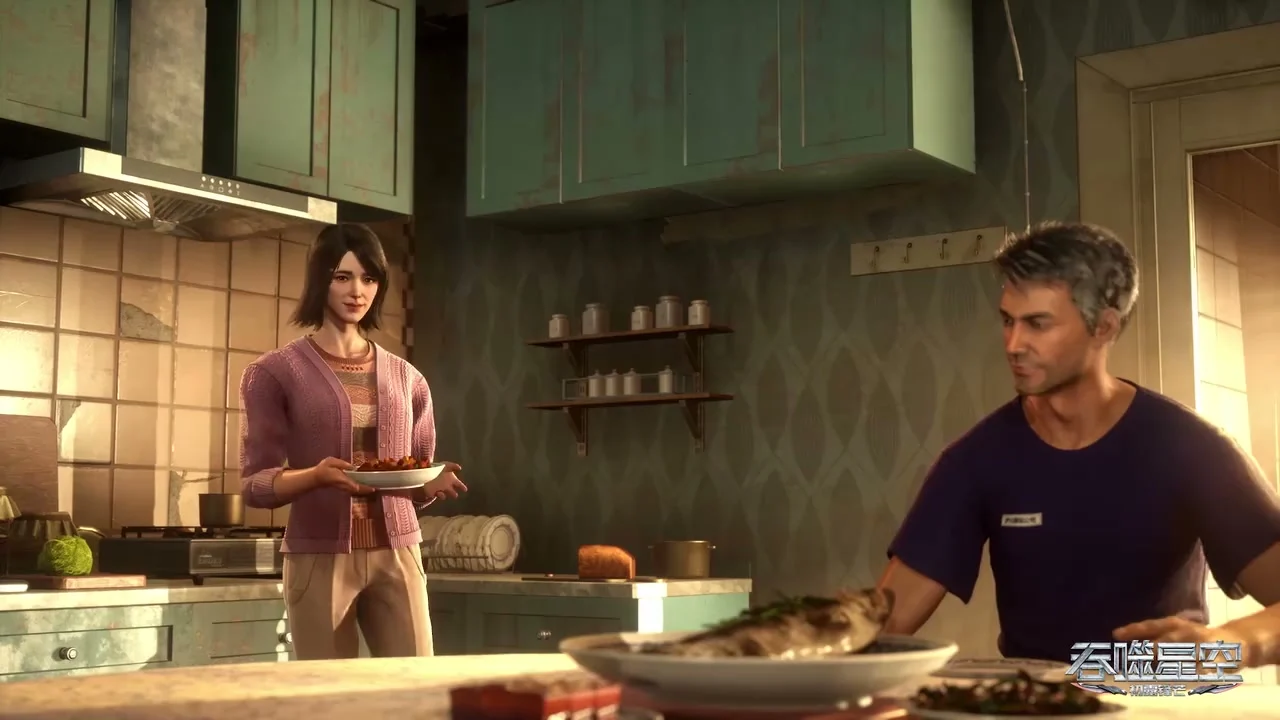
The family meal in episode 2 is one of the opening’s most useful scenes. Luo Feng’s parents make sacrifices in a cramped home. His younger brother Luo Hua uses a wheelchair, and the building has no elevator. When Luo Feng imagines better housing, the benefit is immediate: his brother would not depend on someone carrying him outside.
When a martial organisation offers salary, accommodation and training, the reward answers a problem the family already faces. That makes the recruitment scenes more compelling than a routine announcement that Luo Feng has gained another level. Becoming a fighter changes where his family can live and what they can afford.
Luo Hua’s interest in finance is another welcome detail. It gives him an aspiration of his own. His role is more interesting when he is treated as a person with abilities and plans, rather than only as motivation for the protagonist.
The tests explain what makes a good fighter
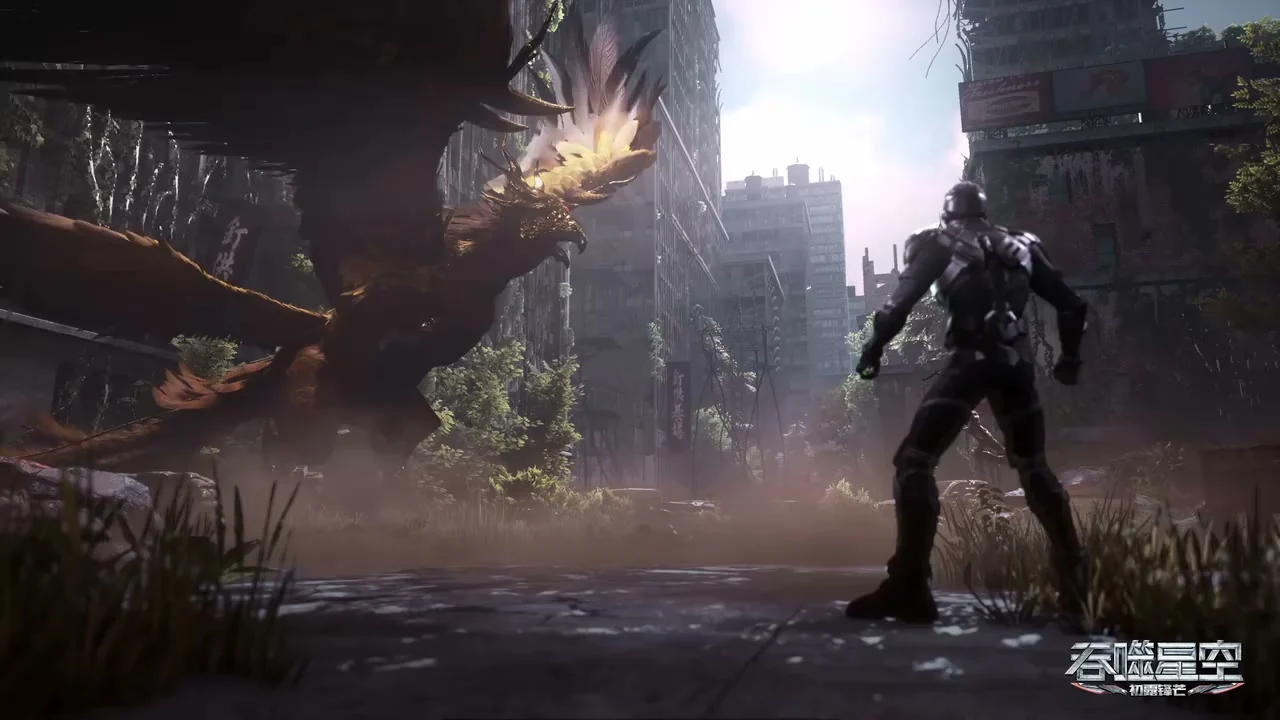
Episode 3’s prospective-fighter assessment is more engaging than a simple punching-machine result. Candidates face simulated monsters, and the explanation of the score includes survival and responses to attacks. Failing to kill everything does not necessarily mean failing the assessment. That distinction makes the evaluation feel like a test of judgement as well as force.
By episode 6, the gap between simulation and a real field test becomes part of the tension. Equipment is issued, rules are explained and candidates are warned about consequences. The transition matters because it changes the conditions under which their abilities have to work.
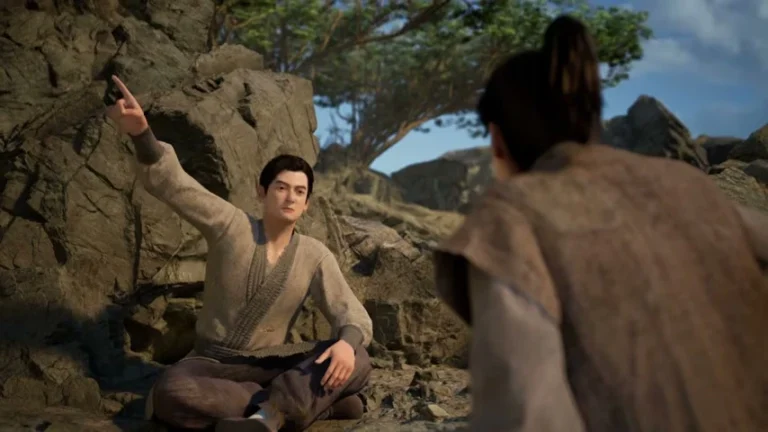
One especially clear training idea is avoiding an attack with minimal movement by reading the opponent. When Luo Feng thinks back to the lesson during an encounter, the action has a decision behind it. You are watching him try to apply something, rather than merely waiting for a larger burst of energy.
This is the opening’s strongest argument for viewers who like progression systems. An improvement is satisfying when you understand what it allows the character to do. If you dislike tests, instruction and discussions of technique, those same scenes may feel like interruptions between fights.
The rivalry is clear, but it can be heavy-handed
Zhang Haobai is easy to dislike. The school conflict, interference around the examination and pressure on Luo Feng’s family keep pushing the same message: wealth and connections can be used against someone with fewer options. It gives the protagonist an immediate obstacle, but the repetition can flatten the drama.
After the rivalry is established, another act of intimidation often repeats the same point instead of revealing something new about either character. If rich-bully plots already wear you down, this stretch may test your patience before the training pays off.
The pacing also depends on your appetite for explanation. Episode 1 spends a substantial stretch establishing the catastrophe and the protected human world. Later episodes explain institutions, qualification rules and energy. This helps a newcomer understand the route forward, but it is not the continuous large-scale combat that an isolated late-series clip might suggest.
How well does the early 3D animation work?
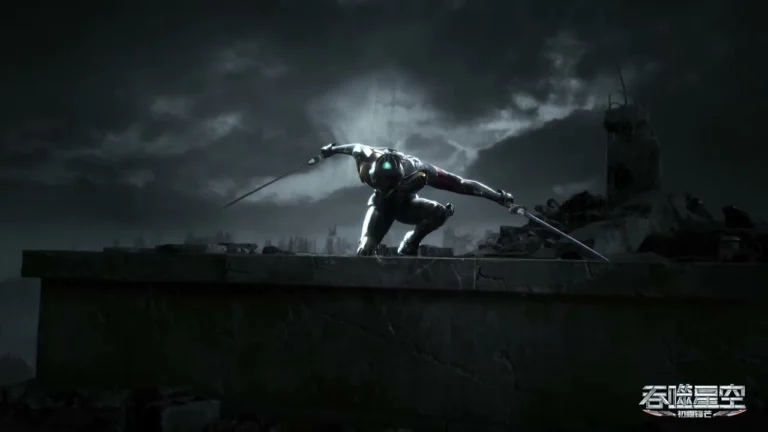
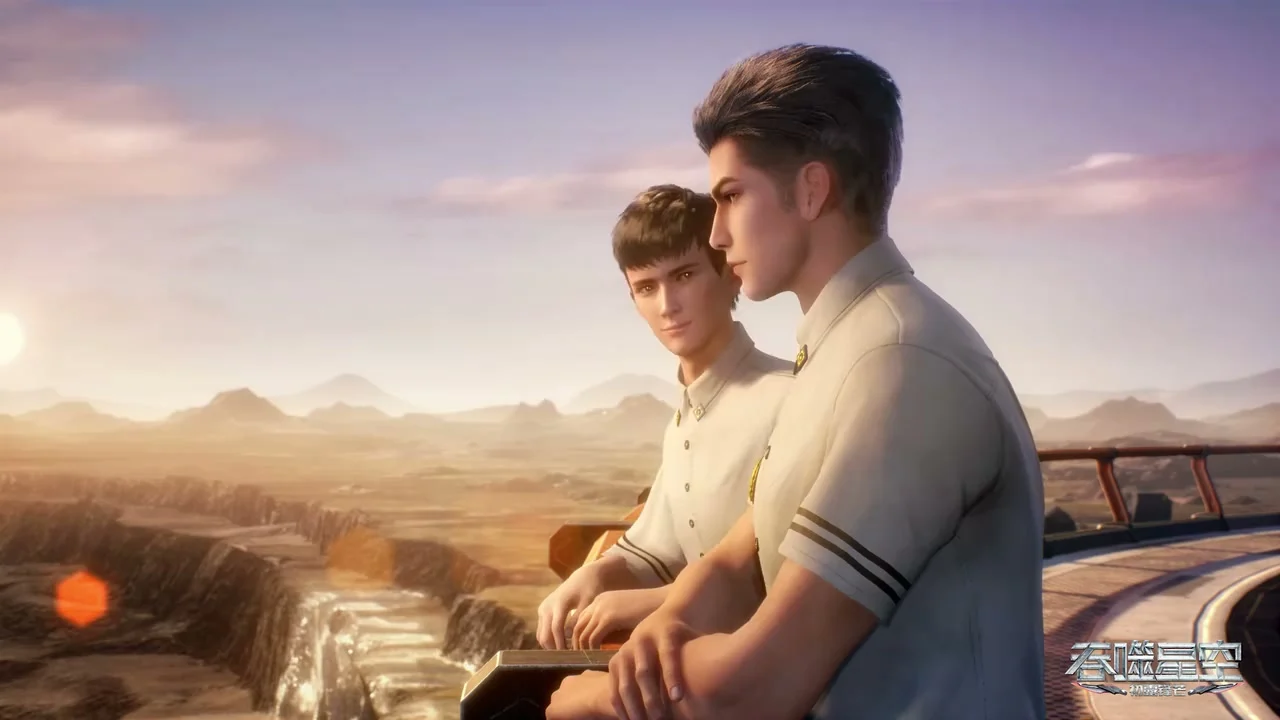
The environments sell the premise better than a generic futuristic backdrop would. Clean public spaces, busy city architecture, worn residential areas and ruined training locations suggest different ways of living within the same world. Vehicles, displays and protective gear reinforce that contrast.
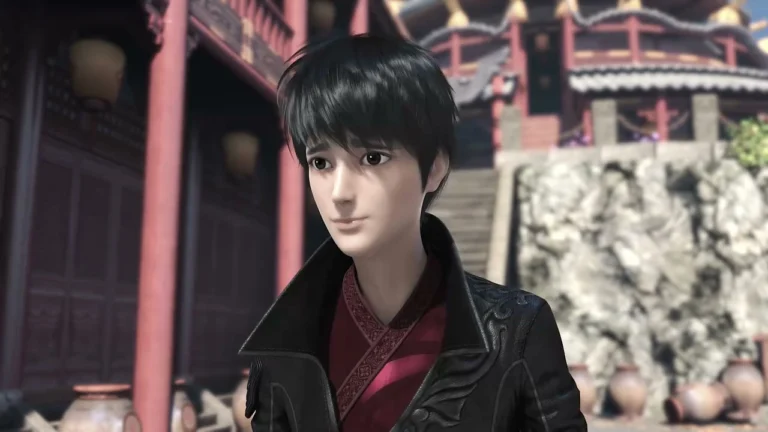
The original opening’s character close-ups are more uneven. Faces and surfaces can look unusually polished or rigid beside the atmospheric scenery. That is a meaningful limitation if subtle expression is what helps you connect with characters. It is also something you can judge quickly from the first episode rather than relying on promises about later improvements.
Is there romance, and does the supporting cast matter?
There is an early romantic thread involving Xu Xin, but the opening is not structured around a romance-first plot. Her role works best when she acts: her part in preserving evidence gives her something practical to contribute to a conflict affecting Luo Feng. The quieter conversation afterward lets the series breathe between threats and training.
Wei Wen gives Luo Feng someone to talk to outside the family, while the instructors bring different expectations of his talent. These characters help the opening move between school, home and professional training, though their lives receive less attention than his.
Still, Luo Feng is the centre. If you want an ensemble in which several leads receive equal development, or a relationship drama with action in the background, this opening offers a different balance.
What to know before starting
- You can begin with the animation. Reading the novel first is not required. The opening introduces its own immediate rules and relationships.
- Start at episode 1 of the 2020 donghua. A later compilation or spectacular battle excerpt is a poor introduction to the family and qualification story.
- Expect violence and threatening situations. Monsters, bullying, assaults and danger in detention are part of the opening. Do not treat its animated format as a promise of children’s entertainment.
- Do not equate a platform’s season label with the whole story. A completed release block does not mean the entire adaptation has concluded.
Where to watch Swallowed Star officially
Begin with Swallowed Star episode 1 on WeTV. Its series listing provides the episode sequence. Crunchyroll also has an official Swallowed Star listing; availability depends on location.
For English viewing, check the subtitle selector on the episode you intend to play. English subtitles and English audio are different options. Do not assume a dub exists because a page is written in English, or that every episode is free because the first one plays without payment.
If the opening works for you, continue with episode 7. If you prefer historical settings and sect rivalries to cities and military-style assessments, compare the alternatives in our cultivation donghua guide.