Hunter x Hunter’s 2011 anime is worth watching if you enjoy clever battles, close friendships and an adventure that grows darker as it goes. Its best confrontations turn on what someone knows, which rules they understand and what they are willing to risk. The trade-off is pacing: some stretches move quickly, while others linger over decisions and explain a brief encounter in considerable detail.
This spoiler-free review covers the 148-episode 2011 adaptation. It reaches a meaningful television stopping point, but it does not adapt the entire manga. You get a substantial journey and a place to pause, but you will need the manga to follow the story beyond that point.
Hunter x Hunter at a glance
Scroll across to compare all columns →
| Version | The 2011 TV adaptation, produced by MADHOUSE |
|---|---|
| Length | 148 episodes; around 57 hours at roughly 23 minutes each |
| Best for | Rule-based abilities, tactical conflicts, friendships and changing genres |
| Main reservations | Uneven pacing, extensive explanation and a tonal shift toward darker material |
| Ending | The TV adaptation stops; the source narrative continues beyond it. |
| Content | Violence, death, disturbing behavior and increasingly intense psychological material |
The early tests show what makes the adventure work
Gon leaves home to become a Hunter, a profession that opens doors to unusual places and pursuits. He meets other applicants with very different motives. The opening turns the journey and its tests into ways of watching people make choices under pressure.
A test in episode 12 captures this neatly: a group must choose between a longer route everyone can take and a shorter route with room for fewer people. The interest lies in how they read the conditions and negotiate, not in who can hit hardest. That habit of questioning an apparent choice carries into the later battles.
Gon’s enthusiasm provides a welcoming center, but the show does not make every person around him equally open or reassuring. The mix of curiosity, friendship and danger creates an adventure that can feel bright without being safe. That tension is present before the story’s darker reputation takes over.
The early relationships give later events their weight. If you enjoy watching Gon and his companions work out a test together, there is already plenty here to like. You should not have to endure dozens of episodes solely because a later arc has a great reputation.

Nen makes power a problem to solve
Nen, the series’ developed system of abilities, is compelling because strength is not its only variable. Limits, conditions, preparation and knowledge can change the value of an ability. Knowing that somebody is dangerous does not necessarily tell you how to deal with them.
The result is a more interesting question than “Who is stronger?” You can ask what information each person has, what they are willing to risk and whether a particular ability is suitable for this situation. An advantage may be real but conditional.
That structure rewards attention. When a restriction matters later, an earlier explanation can become satisfying rather than decorative. The drawback is the amount of explanation. Some confrontations spend more time on rules, observations and internal reasoning than a viewer expecting uninterrupted action may enjoy.
You do not need to memorize a chart before watching. Let the series introduce its ideas in sequence. Looking up every unfamiliar term can expose you to abilities and character information that are better encountered in the story.
Gon and Killua make the long journey matter
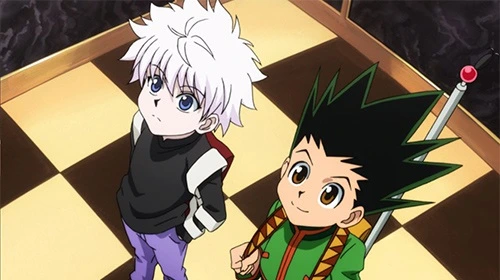
Gon and Killua often see the same danger differently. Gon’s curiosity pushes him forward; Killua is more alert to what could go wrong. Watching them respond to each other’s decisions makes the journey engaging even when there is no fight to win.
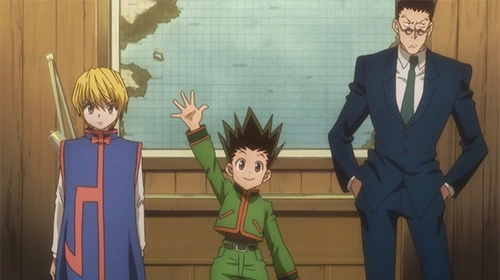
Kurapika and Leorio also help prevent the opening group from feeling like interchangeable companions. Different goals pull attention in different directions. The series can change focus instead of keeping every character on the same road indefinitely.
That flexibility is both a strength and a potential frustration. A character you like may step out of the center for a substantial stretch. The appeal is not that the whole original group receives equal screen time, but that the world can keep moving beyond Gon’s immediate perspective.
For a viewer used to a fixed team and a predictable cycle of battles, the shifts can feel disruptive. For a viewer who likes a story to change its immediate concerns, they make the length easier to justify.
The pacing and darker turns are the main trade-offs
Hunter x Hunter is not paced uniformly. Yorknew’s pursuit and crime-story tension feel different from Greed Island’s training and game rules. The Chimera Ant arc is the biggest patience test: its later stages use extensive narration and simultaneous viewpoints, stretching brief moments of story time across a much longer viewing experience.
That approach gives small decisions room to matter, but the narration sometimes holds up a scene just when you want it to move. Finding the Chimera Ant arc slow does not mean you have missed what it is trying to do. Its careful breakdown of events will suit some viewers much more than others.
Do not let the colorful designs and young leads suggest light family viewing. Violence, cruelty and loss become more confronting as the story progresses. Check the content rating before choosing it for younger viewers.
Avoid deciding from isolated fight clips. They show what the series can look like at its most concentrated, but leave out the setup and explanatory passages that occupy a significant part of actually watching it.
When does Hunter x Hunter get good?
Try episodes 1 to 5 for the adventure and characters; the structured combat training develops from episode 27, and the crime-thriller side takes shape in the Yorknew stretch beginning around episode 37. These are changes in what the series offers, not deadlines by which you must enjoy it. Do not skip the opening to reach them: relationships and information carry forward.
This spoiler-free map shows the commitment more usefully than a promise that it “gets better later.” The ranges group the journey into viewing blocks, including transitions and recaps.
Scroll across to compare all columns →
| Episodes | Story phase | What changes for the viewer |
|---|---|---|
| 1 to 21 | Hunter Exam | Travel, unusual tests and the core friendships. A good measure of whether you enjoy the cast solving problems. |
| 22 to 26 | Zoldyck Family and transition | A shorter, more personal detour that deepens the friendship. Episode 26 is a recap. |
| 27 to 36 | Heavens Arena | Combat training and Nen begin to give battles a clearer set of rules. |
| 37 to 58 | Return home and Yorknew City | The scope shifts toward auctions, organized crime and Kurapika’s concerns. |
| 59 to 75 | Greed Island | Game mechanics and training reward attention to conditions and teamwork. |
| 76 to 136 | Chimera Ant | The longest block: darker stakes, a larger cast and increasingly detailed narration. |
| 137 to 148 | Election and closing stretch | Institutional maneuvering and personal priorities lead toward the anime’s stopping point. |
You can check the numbering in Nippon TV’s episode archive, but its individual synopses contain spoilers. If the early characters and tests leave you unmoved, pause rather than forcing yourself through dozens of episodes for a later arc’s reputation.
Should you watch the 1999 or 2011 version?
For a straightforward first viewing, choose the 2011 adaptation and start at episode one. It retells the beginning; it is not a sequel that expects you to have watched the 1999 version first. The Nippon TV catalog identifies the 2011 MADHOUSE production and its 148 episodes.
Scroll across to compare all columns →
| Question | 1999 adaptation | 2011 adaptation |
|---|---|---|
| Production | Nippon Animation | MADHOUSE |
| How it is packaged | 62 TV episodes, followed by separately released OVA continuations | One 148-episode TV run |
| How far it goes | The TV series and subsequent OVAs together reach the end of Greed Island. | Continues beyond Greed Island into Chimera Ant and the Election arc. |
| Best reason to choose it | You want to explore an earlier interpretation and its visual style. | You want the longer, simpler route for a first viewing. |
Nippon Animation lists the older TV series as 62 episodes; the later Greed Island Final release is a separate continuation. That distinction explains why a catalog can show fewer episodes than a fan’s total for the older version.
The practical advantage of 2011 is coverage, not a claim that every visual choice is better. Follow episodes 1 to 148 from the beginning. Mixing adaptations partway through adds avoidable differences in introductions and pacing; the older production is easier to appreciate as an alternative afterward.
Is Hunter x Hunter finished, and does the anime have an ending?
The 2011 television series ends at episode 148; that is not the end of the entire manga story. The final stretch gives the TV journey a sense of closure while leaving wider storylines open. It is a reasonable place to stop watching, with the option to continue in the manga.
If you need an adaptation that resolves every major thread, this is a significant drawback. If you are happy to enjoy a long journey without seeing the whole source story animated, the ending need not put you off starting.
Decide based on the 148 episodes available, rather than counting on a future season to finish the story.
Where to watch and read afterward
Check the Hunter x Hunter series page on Crunchyroll for the episodes and language versions available in your region. Confirm access before subscribing; catalogs can differ by territory.
After episode 148, the manga continuation begins at chapter 340. Our Hunter x Hunter manga-after-anime guide explains the Volume 32/33 handoff and official reading options. That guide also distinguishes the older adaptation, which stops elsewhere.
You do not need to read ahead while watching. Keeping the continuation guide for the end is an easy way to avoid running into later character descriptions or cover art too soon.
Quick questions
How long does it take to watch Hunter x Hunter?
At roughly 23 minutes per episode, 148 episodes total about 57 hours. At two episodes a day, that is 74 viewing days; at three a day, about 50 days. These are planning estimates, not exact player runtimes.
Is Hunter x Hunter good for someone new to anime?
The initial adventure is easy to enter, and no knowledge of another series is required. What may put you off is the length, frequent explanations or darker material later on. Being new to anime is unlikely to be the problem.
Is it mostly about fighting?
Fights are important, but tests, negotiations, friendships, preparation and changes of objective take substantial time. Choose it for how conflicts are constructed, not for a promise of a major battle in every episode.
The verdict: is Hunter x Hunter worth 148 episodes?
Yes, if you enjoy a long adventure whose rules, relationships and tone keep developing. The tests and friendships should interest you before the biggest battles arrive. Choose the 2011 version for a first watch, expect the Chimera Ant stretch to demand more patience, and go in knowing that episode 148 offers a pause rather than the end of the manga’s story.