My Hero Academia Season 1 is worth trying if you enjoy watching an uncertain beginner learn how to become a hero. The training is engaging because Izuku has to learn when to act, when to cooperate and when he is pushing himself too far. Expect big emotions and plenty of explanation, though. The early rivalry can be abrasive, and some classmates get much less attention than others.
This review focuses on Season 1’s 13 episodes as an entry point, without revealing its major outcomes. Below, you will also find the viewing order, total time commitment and completion status to help you decide whether to continue beyond the first season.
My Hero Academia at a glance
Scroll across to compare all columns →
| Review scope | The 13-episode first season |
|---|---|
| Initial commitment | About five hours at roughly 23 minutes per episode |
| Main TV story | 170 numbered episodes; approximately 65 hours at that same estimate, excluding extras |
| Completion | The main TV run has ended; the extra episode More followed in May 2026. |
| Best for | Earnest heroism, training, rivalries and abilities with practical limitations |
| Reservations | Emphatic exposition, bullying and uneven attention across a large ensemble |
| Content | Violence, injuries, bullying and occasional sexual humor; later material becomes heavier |
Why Izuku is worth rooting for
Izuku Midoriya lives in a society where superhuman abilities, called Quirks, are commonplace. He dreams of becoming a professional hero despite starting without one. That sounds like a familiar underdog setup, but the opening makes a useful distinction between possessing an impressive ability and being inclined to help.
Izuku studies heroes closely. His attention can look awkward or excessive, yet it is also a way of thinking: noticing what a person can do, where a weakness might be and what a situation requires. The series is more persuasive when it turns that observation into a decision than when it simply tells us how much he wants his dream.
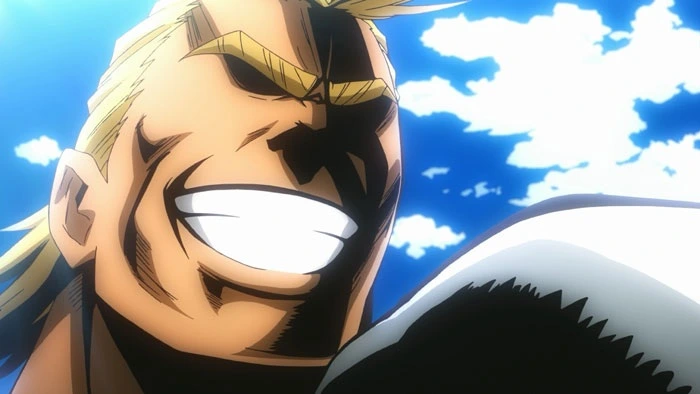
All Might is the hero Izuku wants to live up to. Putting such a confident public figure beside a nervous beginner makes the gap feel enormous. The appeal is watching Izuku find a way forward without suddenly becoming as assured as his idol.
Why the training is more than a delay before the action
The first season treats becoming useful as a process. Physical preparation, school assessments and controlled exercises are not just pauses between villain appearances. They create different definitions of success: meet a requirement, cooperate, avoid an unnecessary risk or solve a problem without copying someone stronger.
The indoor exercise introduced in episode six is a good example. Students work in pairs as heroes or villains, with a time limit and an objective to secure. Winning a personal confrontation and completing the assignment are not automatically the same thing. That gives teamwork and careful planning a purpose beyond simply landing the strongest attack.
Izuku’s enthusiasm does not erase his lack of experience. His tendency to overcommit gives effort a cost, which is more engaging than a story where wanting something badly automatically makes every choice correct. The action works best when a decision reveals how a character thinks.
The limitation is that the show often explains those decisions at length. If you like a transparent thought process, that can make the exercises easier to follow. If you prefer action to communicate everything visually, the commentary may feel like it is interrupting a moment you already understood.
The characters are engaging, but the tone is emphatic
Izuku is an openly emotional protagonist. His anxiety, admiration and determination are rarely understated. That sincerity is a strength when you connect with him, and a barrier when you do not. A viewer looking for a detached or effortlessly cool lead should adjust expectations immediately.
Bakugo’s hostility makes the rivalry uncomfortable rather than merely competitive. His early bullying can make the opening difficult to enjoy, especially if you came looking for a comforting school story.
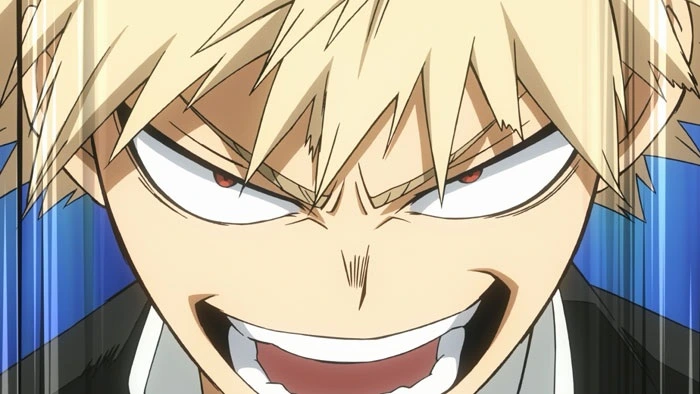
The class adds energy through contrasting temperaments and powers. The first season gives you enough to start noticing favorites, though it cannot turn every introduction into a full character arc. Think of it as establishing a working ensemble. If you want every side character’s personal story right away, the distribution of attention will feel lopsided.
The exaggerated expressions fit that emotional style. Izuku’s excitement and embarrassment are easy to read, even before he explains himself. If you prefer a quieter lead, the constant intensity may wear on you.
What might put you off?
Scroll across to compare all columns →
| Possible sticking point | What to expect |
|---|---|
| You want constant fights | Training, explanations and school relationships take substantial space. |
| You dislike earnest speeches and visible emotion | These are part of the show’s identity, not just an opening-episode quirk. |
| You want a short, complete story | Season 1 is a manageable trial, but it opens a much longer narrative. |
| You find hostile rivalries exhausting | The early relationship with Bakugo can be a real barrier. |
The question is whether Izuku’s earnestness draws you in. If it does, the training has an emotional reason to matter. If you find his delivery exhausting, do not assume a larger cast will remove that obstacle.
How much should you watch before deciding?
Try the first two episodes to judge whether the central emotional premise works for you. If it does, continue through episode four to see how aspiration begins turning into a practical challenge. That is a reasonable trial, not an obligation to finish an entire season before forming an opinion.
If the school setting is the main attraction, continue a little further into the classroom material. But do not rely on “it gets better later” as a reason to ignore your own response. Later developments can expand a story; they do not make its early tone irrelevant.
Is My Hero Academia finished?
The main television run is complete. The official final-season announcement identifies episodes 160 to 170 and the December 13, 2025 finale. The extra episode More followed on May 2, 2026. See the official final-season information for the original schedule.
Season 1 starts a longer story rather than resolving it, but the main TV finale is available when you reach it. Films, specials and spin-offs sit outside the 170 numbered episodes.
A simple starting order and realistic time commitment
For the main story, watch Seasons 1 to 7, then Final Season (Season 8), then More. Start at Season 1, episode 1; the official first-season list contains 13 episodes. Save More, officially numbered 170+1, until after episode 170: it is a follow-up to the ending and contains major spoilers for a newcomer.
At around 23 minutes each, those first 13 episodes take approximately five hours. The 170 numbered TV episodes work out to roughly 65 hours using the same estimate. Exact playback time varies; that calculation includes the usual episode credits and does not add films, OVAs, recaps listed separately or More.
Where to watch My Hero Academia
Use the official My Hero Academia page on Crunchyroll to check the seasons, subtitles and dubs available in your region. Access can depend on location and subscription; a series page does not guarantee every language version is included everywhere.
Check the season label carefully. A movie, spin-off or extra episode with the same branding is not a substitute for the first episode of the main TV series.
Quick questions
Is My Hero Academia good for beginners?
Yes, if an earnest superhero story appeals to you. It explains its premise and abilities as it goes. You do not need experience with other anime, but check the age rating: bullying, injuries and occasional sexual humor may make it unsuitable for younger viewers.
Does My Hero Academia get better?
The opening broadens from Izuku’s personal goal into school exercises and a larger cast. If you like the emotional setup but want more interaction, that expansion can help. If Izuku’s delivery or the frequent explanations already bother you, a bigger cast may not change your mind.
Are the My Hero Academia movies necessary?
No. The theatrical films are optional for following the main TV storyline. They add adventures and character connections, so skipping them can mean missing a reference, but you can continue through the numbered seasons. If you add a movie, check its placement first: later abilities and cast members can spoil developments you have not reached. More is a follow-up episode, not a theatrical film; watch it after episode 170.
The verdict: should you start My Hero Academia?
Try it if you want sincere heroism, a vulnerable lead and school exercises with consequences. Episodes one and two show you the emotional foundation; by episode four you can judge how that ambition translates into action. The first season is a manageable five-hour trial, but its loud emotions and abrasive rivalry are part of the experience you are choosing.