One Punch Man Season 1 is worth watching for its spectacular fights and dry sense of humor. Saitama’s overwhelming strength is the setup, not the whole appeal. The story finds its humor in Saitama’s everyday frustrations. Other heroes give the fights their tension because they have much more to lose.
This spoiler-free review covers the 12-episode first season. It is a short starting point, with later seasons continuing the story. You do not need to read the manga or understand years of superhero references before starting.
One Punch Man Season 1 at a glance
Scroll across to compare all columns →
| Best for | Deadpan comedy, expressive action and superhero satire |
|---|---|
| Length | 12 TV episodes; roughly 4½ to 5 hours including credits |
| Main strength | The contrast between Saitama’s indifference and everyone else’s urgent ambitions |
| Main reservation | The central joke can feel repetitive if you want a conventional climb toward greater power |
| Content | Bloody monster violence, grotesque creatures and occasional sexual humor |
| Starting point | Season 1, episode 1; no prequel homework required |
Watch our One Punch Man Season 1 review
Why an unbeatable hero can still be interesting
Most action stories ask whether the hero can become strong enough. One Punch Man begins after that problem has effectively been solved. Saitama can flatten terrifying opponents, yet he still needs groceries, a routine and something to look forward to. Power has removed an obstacle without supplying a purpose.
Episode two makes the contrast wonderfully small: Saitama struggles to swat an ordinary mosquito. After watching him face enormous threats, seeing him lose patience with something so trivial tells you more about the comedy than another speech about his strength would. The joke is in the mismatch between what he can do and what still annoys him.
The first episode establishes this contrast clearly enough that you can judge the basic tone straight away. If the collision between apocalyptic danger and everyday boredom does nothing for you, more spectacle may not solve that. If it clicks, the supporting cast gives the idea somewhere to go beyond repeating the same finish.

Genos gives the comedy something to push against
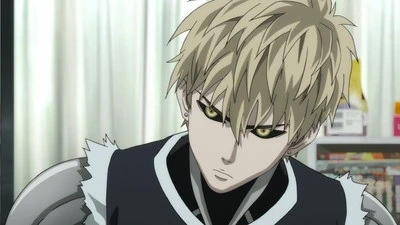
Genos approaches improvement with the intensity Saitama no longer possesses. He assumes there must be a secret worth learning behind Saitama’s strength. Saitama, meanwhile, struggles to give him the inspiring explanation he expects. Their conversations work because Genos takes every answer so seriously.
Genos’s determination still matters, even when Saitama finds the conversation exhausting. The show lets you care about his wish to improve while laughing at his choice of mentor.
The hero rankings add another problem that strength cannot fix: being powerful does not guarantee anyone will recognize your work. Saitama can defeat an enemy and still struggle to earn respect. That gives the story somewhere to go after the punch has landed.
This is also where the emotional stakes live. Other heroes have something to lose when they enter a fight. Their courage can matter even when their abilities fall short. The series becomes more engaging when you pay attention to why someone steps forward, rather than only counting how quickly Saitama could end the encounter.
The action is part of the joke
The first season puts real effort into the fights. Detailed poses, forceful movement and grand entrances make opponents look formidable, which makes Saitama’s blunt reactions funnier. The action is exciting even when the outcome seems obvious.
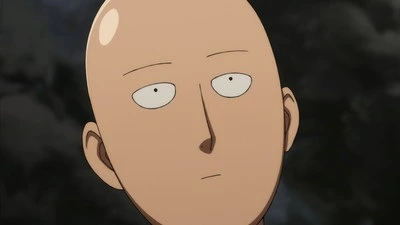
Saitama’s design is especially effective in that contrast. His simple expression can make him look almost misplaced beside a heavily engineered opponent. When the presentation becomes more intense, the difference feels deliberate rather than accidental. The show can communicate a change in mood before anyone explains it.
The contrast also works in conversation. Genos delivers his personal history with complete seriousness while Saitama wants a much shorter explanation. The scene does not need a fight: one character is living an intense origin story and the other is trying to get through a conversation. That difference in tempo is as important as the spectacular attacks.
Where Season 1 may lose you
The unbeatable-hero premise limits one kind of suspense. If your favorite part of an action series is seeing the lead learn a technique, fail and gradually overcome an opponent, Saitama offers a different experience. The surrounding characters supply more of that conventional struggle.
The expanding roster can also feel uneven. A striking introduction does not guarantee a character will receive sustained development in a short season. Some heroes function as quick portraits or comic contrasts. That suits the pace, but it can frustrate viewers who immediately attach themselves to a supporting character.
The dry humor is also a matter of taste. If Saitama’s flat reactions leave you cold, more extravagant enemies will not necessarily make the joke work. The series adds situations and characters rather than replacing its comic personality.
Who should watch, and how much should you try?
Scroll across to compare all columns →
| What you want | How well it fits |
|---|---|
| Big action without a long commitment | A strong fit: the first season is a manageable 12 episodes. |
| A familiar superhero setup with a dry comic twist | A strong fit; detailed knowledge of other series is optional. |
| A lead who grows stronger through each challenge | A weaker fit; Saitama’s problem begins after becoming overwhelmingly strong. |
| Deep development for every supporting hero | Expect a lively ensemble, not equal attention for everyone. |
Try the first three episodes if the opening interests you. That gives the relationship between Saitama and Genos time to establish itself without asking for a large investment. By then, you should have a good sense of whether their humor works for you.
It is accessible to anime newcomers, although accessible does not mean suitable for young children. The bright costumes and comic delivery coexist with graphic monster violence. Check the age rating and content information on your platform.
What to watch after One Punch Man Season 1
Begin with Season 1 and continue in release order if you want more of the world. The official episode guide separates the seasons; use those labels rather than assuming every streaming service numbers its catalog the same way.
The main TV route is Season 1 → Season 2 → Season 3. Later seasons expand the cast and conflicts, so this review’s recommendation for the opening season should not be read as a rating of every continuation.
As of September 2026, the official site has announced the second cour of Season 3 for 2027. A cour is a broadcast block within a season. Start with Season 1; the upcoming continuation is for viewers who have followed the later seasons.
Where to watch One Punch Man
For US viewers, start with the One-Punch Man series page on Hulu. Check which seasons and language versions your plan includes before subscribing. A trailer on a service is not the same as access to the full season.
The official Japanese broadcast and streaming page lists options for Japan. For other countries, search your local streaming catalog and check that Season 1 and your preferred subtitles or dub are available before subscribing.
Quick questions
Is One Punch Man repetitive?
The central joke repeats, but the surrounding situations change its meaning. Genos, the hero rankings and the ordinary problems of Saitama’s life provide variation. If you dislike the deadpan contrast itself, however, the repetition will probably stand out more than the variations.
Do I need to read the manga first?
No. Season 1 introduces the premise and characters on its own. Start with the first TV episode; reading beforehand is a preference, not an entry requirement.
Does Season 1 finish the whole story?
No. It has a season finale, but later seasons continue the narrative. The 12 episodes make a manageable first season, but they do not resolve every ongoing storyline.
The verdict: is One Punch Man Season 1 worth your time?
Yes, if dry comedy and big action are what you want from a short first season. The contrast between Saitama and Genos gives the premise more life than the title alone suggests. Try three episodes; keep going if the everyday frustrations make you laugh as much as the fights impress you. Choose something else if your main draw is watching the lead struggle to grow stronger.