Naruto is worth starting if you enjoy a long character journey, friendships that become rivalries, and battles shaped by tactics as well as power. Its emotional appeal is easy to understand: a lonely, underestimated child wants other people to acknowledge him. Its biggest obstacle is time. Repeated explanations, flashbacks and anime-original detours can make progress feel slower than the underlying story deserves.
This review covers the original 2002 Naruto anime. Naruto Shippuden is its sequel, not another name for the same 220 episodes. You do not have to promise yourself the entire franchise before trying the opening story, and you do not need nostalgia for the series to decide whether its strengths suit you.
Naruto at a glance
Scroll across to compare all columns →
| Series reviewed | Naruto, the original TV anime: 220 episodes |
|---|---|
| What follows | Naruto Shippuden: 500 separate episodes |
| Best for | Underdog growth, team dynamics, rivalries and tactical battles |
| Main reservations | Uneven pacing, repetition, filler and uneven attention to the supporting cast |
| A useful first checkpoint | Episodes 1–5 introduce the team; episodes 6–19 show its first major mission |
| Content to expect | Combat injuries, death, childhood isolation and occasional sexual humor |
| Official starting point | VIZ’s Naruto watch/own page |
What is Naruto about?
Naruto Uzumaki is a young ninja shunned by many people in his village. He wants to become Hokage, the village’s leader, partly because the position represents the recognition he has never had. After graduating from the Ninja Academy, he joins Sasuke and Sakura under their teacher Kakashi.
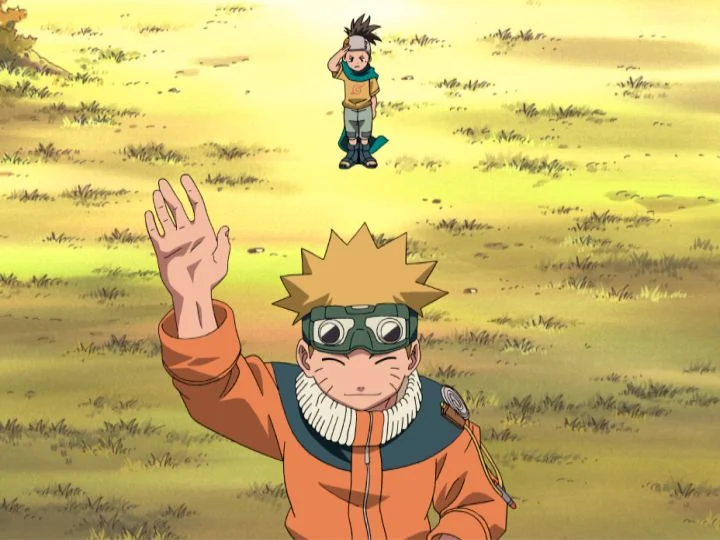
The early story puts a gap between Naruto’s ambition and his readiness. He can announce a dream much more easily than he can cooperate, control his fear or understand another person’s pain. That gives the training and missions a purpose beyond collecting techniques: they test what kind of person he wants to become.
It is an accessible premise, but the presentation is not uniformly gentle. The bright clothes and broad comedy sit alongside violence, grief and the expectation that children will become useful to a military community. That contrast is a substantial part of the original series’ character.
What makes Naruto worth watching?
The need to be recognized gives the action an emotional center
Naruto’s loudness is easier to understand when you see what it is trying to cover. Being noticed, even for the wrong reason, can seem preferable to being ignored. His relationship with Iruka gives the opening a human scale: recognition from one adult can matter more than an impressive technique.
That is a stronger foundation than simply wanting to become the most powerful fighter. A victory matters when it changes a relationship or challenges somebody’s judgment. Even if the broader ninja setting does not immediately interest you, the desire to stop being dismissed is easy to follow.
The best fights turn limitations into opportunities
The original series often makes a technique interesting through how it is used. A deception, a change in timing or cooperation between teammates can matter as much as raw strength. Naruto’s first major mission with Team 7 is a useful example: the young characters have to respond to danger that is plainly beyond their normal experience.
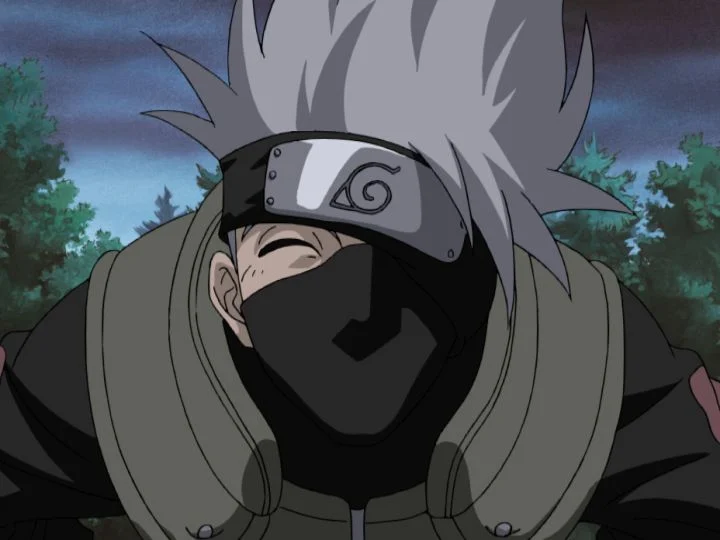
This is why an early training exercise can be worth your time. It establishes habits, misunderstandings and skills that later affect a confrontation. When that preparation pays off, a fight feels like an argument made through actions rather than a sequence of unrelated spectacular attacks.
The animation is not equally elaborate in every episode. The appeal is in the better-directed sequences and their dramatic setup, not a promise of modern showcase animation every week.
Rivalry creates more than one reason to improve
Naruto and Sasuke do not want the same things, even when they are competing in the same space. Their differences make the team more interesting than a group united by a single uncomplicated goal. Kakashi’s emphasis on cooperation also runs against the urge to prove yourself alone.
The wider cast introduces other pressures: family expectations, limited aptitude, status and the desire to be useful. Rock Lee is an especially clear example of how a fighting style can express a character’s problem. You do not need to know the result of a match to understand why his participation matters.
What makes Naruto harder to recommend?
The pacing is inconsistent. An effective moment can be followed by a lengthy explanation or a familiar memory. Those reminders made practical sense in a weekly broadcast, but watching several episodes together exposes the repetition. Important stretches can feel as though they are taking an unnecessarily long route to their next decision.
The supporting cast does not receive equal development. Sakura is central to Team 7, yet the early series often gives Naruto and Sasuke more substantial goals and dramatic attention. A memorable introduction also does not guarantee that another character will remain equally important. Enjoy the ensemble without expecting every promising figure to receive a comparable arc.
The comedy can be a barrier. Naruto’s shouting, recurring gags and occasional sexual humor are not incidental to the opening tone. His immaturity has a narrative purpose, but knowing that does not automatically make every joke enjoyable. If this style irritates you, it is reasonable to factor that into your decision.
The original anime does not finish the whole Naruto story. It leads into Shippuden. Someone seeking a compact series with a final destination in one run may be happier with Death Note for a thriller, or the completed-story options in our fantasy anime guide.
When does Naruto get good?
There is no single episode that makes Naruto work for everyone. A more useful approach is to give the opening a clear checkpoint. Episodes 1–5 establish Team 7; episodes 6–19 cover its first major mission outside the village. Those ranges are identified in the official anniversary retrospective, which contains story spoilers beyond this review.
The first five episodes tell you whether you enjoy the basic personalities and team friction. The Land of Waves mission then shows what happens when training meets consequences: the danger is more serious, teamwork has a practical purpose and opponents are more than targets waiting to be defeated.
If you are curious but unsure, reaching the end of that mission gives you a fairer sample than judging only the opening comedy. It is roughly seven hours for episodes 1–19 at 23 minutes each, so it is still a meaningful commitment, not a tiny trial.
If you dislike both the characters and the dramatic style after that, do not force another fifty episodes because somebody promised that the Chunin Exams will fix everything. The next arc expands the cast and competitive structure, but it continues many of the same storytelling habits. You can appreciate Naruto’s influence without making it your next long watch.
How long does it take to watch Naruto?
Scroll across to compare all columns →
| Scope | Episodes | At 23 minutes each | At two episodes a day |
|---|---|---|---|
| Original Naruto | 220 | About 84 hours | 110 days |
| Naruto Shippuden | 500 | About 192 hours | 250 days |
| Both TV series | 720 | About 276 hours | 360 days |
The counts come from VIZ’s Naruto and Naruto Shippuden catalogs. These estimates use 23 minutes per episode, including opening and ending credits. They exclude films, specials, Boruto, ads and breaks. Skipping credits or selected filler reduces the total; your viewing time depends on the route you choose.
For most newcomers, the more useful number is tonight’s commitment. Two episodes take around 46 minutes. You can start with that and decide whether you want another evening with the cast before thinking about the whole 720-episode journey.
Is Naruto worth watching without filler?
Yes. A route focused on the main adapted story is a sensible choice if pacing is your biggest concern. In this context, filler generally means anime-original material that does not advance the manga’s main storyline. Some episodes mix adapted material with original additions, so “not entirely manga-based” is not the same as “safe to skip in full.”
Removing optional detours can make the journey more direct, especially if you want to stay with a central conflict. It does not remove all flashbacks, repeated explanations or slow stretches inside the main adaptation. If those habits are what you dislike, a filler guide helps only part of the problem.
For a first viewing, use a guide that distinguishes mixed episodes from wholly optional stories, keep the main material in sequence and preserve the transition into Shippuden. Do not skip episodes 6–19: the Land of Waves mission is part of the central story, not a disposable side assignment. You can return to extra adventures later if spending more time with the cast becomes the point.
For an episode-by-episode reference, Anime Filler List’s Naruto guide separates manga canon, mixed episodes and filler. It is a community-maintained guide, not a publisher’s official watch order. Use its numbered classifications and hide episode titles if you want to reduce spoilers. Keep mixed episodes on a first viewing so you do not miss main-story scenes.
Should you watch Naruto or Shippuden first?
Watch Naruto first, then Naruto Shippuden. Shippuden continues established relationships, goals and unresolved conflicts after a time jump. Starting there because the characters look older or the clips look more spectacular sacrifices much of the context that makes those scenes matter.
This does not mean every related film must become homework. Begin with the original TV series in episode order. You can decide how much optional material to explore once the central cast has earned that interest. Boruto is another later commitment, not part of the starting requirement.
Where to watch Naruto officially
VIZ’s Naruto page for the opening episodes is an official route to viewing and ownership options. Check that your chosen service lists the original Naruto rather than only Shippuden, and confirm available episodes and audio languages for your country before subscribing.
If you prefer to read instead, VIZ’s main Naruto page also lists the manga. Reading lets you control the pace and avoids anime-original detours, although it gives up the performances, music and animated choreography that are part of the show’s appeal.
Should you start Naruto?
Start it if you want a character’s desire for recognition to grow into a larger story about bonds, competition and responsibility. The original series’ best moments connect an emotional problem to a practical one: learning a skill, working with someone difficult or choosing how to respond when confidence is no longer enough.
Skip it for now if you want a tightly edited, short series or if its comedy and repetition consistently get in your way. The sensible recommendation is to try the opening team story and first major mission, then decide. Naruto gives you plenty of reasons to stay, but the number of episodes you could eventually watch is not itself one of them.