Danmei is a Chinese fiction genre centered on romantic relationships or attraction between men. You will often see it described in English as Chinese boys’ love, or BL. It tells you something about the story’s romantic focus, not whether the story comes as a novel, a comic or an animated adaptation.
That last distinction clears up a lot of confusion. A book with an illustrated cover can still be a prose novel. A manhua can adapt a danmei novel. And a donghua can bring characters from the same story to the screen without being the same edition or telling the story in exactly the same way.
Watch: What is danmei?
How do you pronounce danmei, and what does it mean literally?
In Mandarin, 耽美 is written dān měi in pinyin: a high, level first tone on dān, followed by a third tone on měi. “Dahn may” is a rough English sound guide; it leaves out the tones.
The characters suggest being absorbed in beauty. The term came through Japanese tanbi, associated with aestheticism, before acquiring its modern genre use. That history explains the wording, but “beautiful fiction” is too broad a definition today: when an English publisher labels a Chinese novel danmei, the useful expectation is its male–male romantic focus.
Danmei, BL, manhua and donghua: what changes?
Scroll across to compare all columns →
| Term | What it tells you | What it does not tell you |
|---|---|---|
| Danmei | A Chinese fiction tradition focused on love or attraction between men | The format, age rating or setting |
| BL, or boys’ love | A broader label for stories about male–male romance | That the work is specifically Chinese |
| Manhua | A Chinese comic | That romance, or danmei, is its genre |
| Donghua | Chinese animation in common English-language usage | That the story is romantic |
| Novel | A story primarily told in prose | That an illustrated cover makes it a comic |
Imagine a listing that says “danmei novel.” You can expect prose and a male–male romantic focus. Change the last word to “manhua,” and the story is told through comic panels. You have changed the format, not replaced the romantic focus.
For more on the format labels, see our explanations of manhua and donghua.
Is danmei the same as BL?
There is substantial overlap. English-language publishers use both labels for Chinese stories about men falling in love. “Danmei” is the more specific term for the Chinese tradition; “BL” is useful when discussing a broader range of works from different places.
Seven Seas describes the genre as open to creators and readers of all genders. You do not need to fit a particular demographic to enjoy it, and the label alone does not tell you an individual author’s identity or a reader’s sexuality.
The more useful question when choosing a book is what kind of story surrounds the romance. Do you want a mystery, a historical setting, supernatural adventures or a contemporary relationship? Two books can both be danmei and offer very different reasons to turn the page.
Does danmei always mean fantasy?
No. Fantasy is one setting you will encounter, not part of the basic definition. It is easy to form the opposite impression if your first recommendations are full of cultivators, gods and spirits.
When a description uses xianxia or wuxia, those terms add information about the world and its martial or supernatural traditions. “Danmei” adds information about the romantic focus. A book can carry both kinds of label without either one canceling the other.
If cultivation and martial-world terminology is slowing you down, our xianxia versus wuxia guide explains the difference. You can also choose a contemporary story if learning a fantasy setting is not what you want from your next read.
Examples in fantasy and contemporary settings
Heaven Official’s Blessing: a danmei novel
Mo Xiang Tong Xiu’s Heaven Official’s Blessing: Tian Guan Ci Fu follows Xie Lian, a former crown prince who has repeatedly risen to godhood and fallen from favor. The first volume introduces his work in the mortal realm and a meeting with the intriguing San Lang.
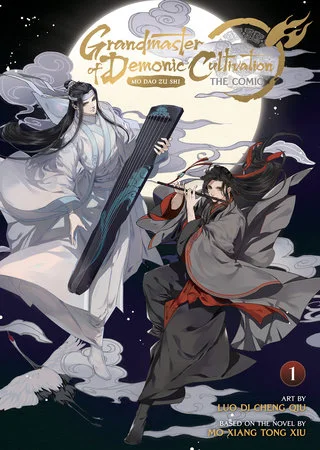
Choose the novel if you want to enter the story through prose. Seven Seas publishes an English edition, and its volume-one cover appears at the top of this page. The illustrations are part of that book’s presentation; they do not turn it into a panel-by-panel comic.
It is a useful starting option if gods, ghosts and a mysterious connection between the leads sound appealing. It is a less direct match for someone specifically looking for a realistic modern setting.
Grandmaster of Demonic Cultivation: one story, different book formats
Grandmaster of Demonic Cultivation: Mo Dao Zu Shi, also by Mo Xiang Tong Xiu, follows Wei Wuxian after his return to life and his renewed connection with Lan Wangji. Its fantasy and mystery elements exist alongside the romantic thread.
English-language readers can find both the novel and a manhua adaptation. The latter credits Luo Di Cheng Qiu for the artwork. Its cover explicitly says “The Comic”, which is a helpful detail to look for when a store places multiple editions next to each other.
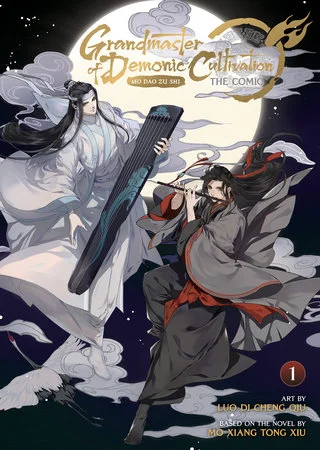
Pick the format you actually want to read. Comic panels can make faces, clothes and action easier to picture; prose gives the story a different amount of room for narration. Neither preference is a reason to buy the wrong edition just because its cover is familiar.
Run Wild: Sa Ye: a contemporary starting point
Wu Zhe’s Run Wild: Sa Ye follows Jiang Cheng and Gu Fei through a relationship shaped by school and difficult family circumstances. Seven Seas publishes the English novel. This is a useful alternative if you want a modern setting instead of gods, cultivation ranks and supernatural investigations.
Contemporary does not necessarily mean carefree: everyday pressures can carry the emotional weight that battles supply in fantasy. Look for “Novel” in the edition name if you want the prose version.
Is danmei always explicit or adults-only?
No. “Danmei” is not an age rating and does not specify how explicit a book will be. Check the publisher’s rating and content description for the particular work and edition.
That check should cover more than sexual content. A fantasy romance may also include violence, disturbing situations or grief. A gentle-looking cover is not a reliable guide to those themes, just as a dark cover does not tell you how the relationship develops.
If you have discovered a story through an adaptation, do not assume that the novel has exactly the same content or emphasis. Start with the edition’s own description and sample rather than treating familiarity with the characters as an age-rating shortcut.
How to choose your first English edition
Start with an official English book listing: Heaven Official’s Blessing (Novel), Mo Dao Zu Shi (Novel), Volume 1 or Run Wild: Sa Ye (Novel), Volume 1. For illustrated panels, use Mo Dao Zu Shi (The Comic / Manhua) instead. These publisher-distributor pages identify the edition and provide buying options; they are not free full-book readers.
Search the full title and author’s name, then check the format field on the publisher’s page. Look for “Novel,” “The Comic / Manhua,” or another explicit edition label. A volume number by itself is not enough: both a novel and its comic adaptation can have a volume one.
Read the opening sample before buying several volumes. You are checking whether the narration, dialogue and amount of world-building suit you. If the story uses multiple names or titles for a character, consult any glossary included in that edition before assuming they refer to different people.
Finally, check the sequence of that specific edition. Do not jump from comic volume two to novel volume three on the assumption that the numbering lines up. Start at the beginning when switching formats unless you have a reliable chapter correspondence.
Once those details are clear, the label becomes useful rather than intimidating: choose the kind of romance and setting you enjoy, then make sure the book in your basket is the format you meant to read.