Start with Death Note for a battle of wits, ERASED for a short mystery with an emotional center, or Monster for a patient, unsettling crime story. If you want science fiction, choose Psycho-Pass for policing and moral dilemmas or Steins;Gate for the consequences of interfering with time. Paranoia Agent is the stranger, more disorienting choice.
The best thriller anime is not necessarily the one with the most twists. It is the one whose kind of suspense you enjoy: waiting for someone to make a mistake, piecing together a mystery, or wondering whether you can trust what you are seeing. These six picks offer different versions of that tension. The recommendations below explain the trade-offs without revealing culprits, major reversals or endings.
Best thriller anime at a glance
Scroll across to compare all columns →
| Anime | Best reason to choose it | Starting commitment | Main caveat |
|---|---|---|---|
| Death Note | Mind games and competing ideas of justice | 37 episodes; about 14 hours | Heavy internal monologue; uneven later pacing |
| ERASED | A compact mystery with personal stakes | 12 episodes; about 5 hours | Child abuse and violence; a compressed finish |
| Monster | A long, grounded psychological investigation | 74 episodes; about 28 hours | Patient pacing and a large supporting cast |
| Psycho-Pass | Crime, surveillance and difficult judgments | Original Season 1: 22 episodes; about 8–9 hours | Graphic violence and disturbing cases |
| Steins;Gate | Time-travel consequences and mounting pressure | Main 2011 TV run: 24 episodes; about 9 hours | A deliberately leisurely, eccentric opening |
| Paranoia Agent | Surreal psychological unease | 13 episodes; about 5 hours | Ambiguity rather than a tidy detective puzzle |
Times are rounded estimates using roughly 23 minutes per episode, including credits and excluding ads or breaks. They cover the run named here, not every film, special or sequel. Death Note, Monster, ERASED and Paranoia Agent provide a finished TV story. Steins;Gate’s original TV run reaches its central resolution, with additional material available; Psycho-Pass Season 1 completes its immediate storyline within a larger franchise.
Death Note — for a contest where information is a weapon
Light Yagami finds a notebook that can kill a person whose name is written in it. He decides to use it to reshape the world, while the detective L tries to uncover the person behind the deaths. The appeal is immediate: extraordinary power does not make Light impossible to catch.
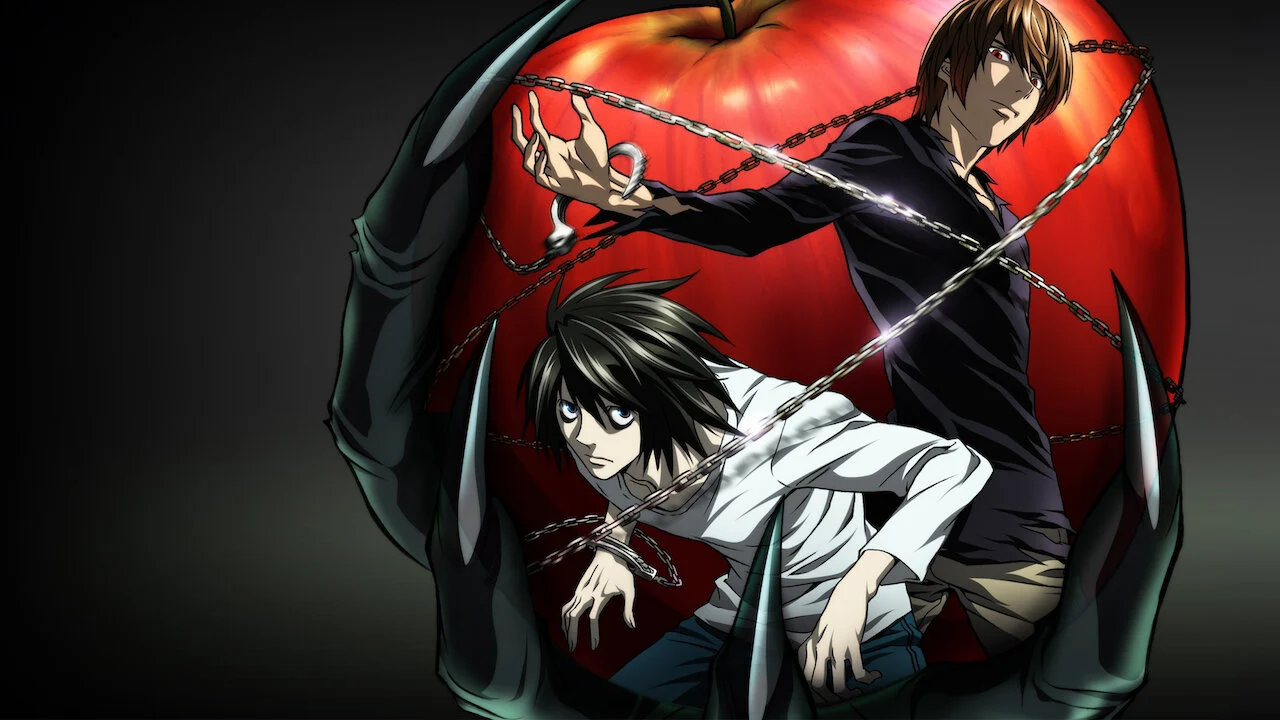
What makes this a useful first thriller is how clearly it sets up opposing goals. Light wants to act without exposing himself. L needs to turn a suspicion into something he can demonstrate. A public statement, an ordinary interaction or a small inconsistency can therefore matter as much as an action scene. The tension comes from understanding why a seemingly safe move might be dangerous.
The second episode is a good test of whether this style works for you. Its confrontation turns the premise into a contest, without requiring a long introduction to the world. If you enjoy anticipating how each side will interpret the other’s behavior, there is a strong reason to continue.
Keep in mind: the show explains a great deal of its thinking aloud. That makes complicated maneuvers accessible, but can feel overemphatic if you prefer quiet observation. Its later stretch is also less consistently absorbing than its initial central rivalry. Our Death Note anime review explores those strengths and limitations without ending spoilers.
Where to watch: check Death Note on Hulu or the Netflix anime listing. Choose the 2006 animated series, not a live-action adaptation.
ERASED — for a shorter mystery that makes you care about the people
Satoru Fujinuma experiences involuntary jumps backward in time around dangerous incidents. A much larger jump sends him into his childhood, giving him a chance to confront events whose consequences reach into his adult life.
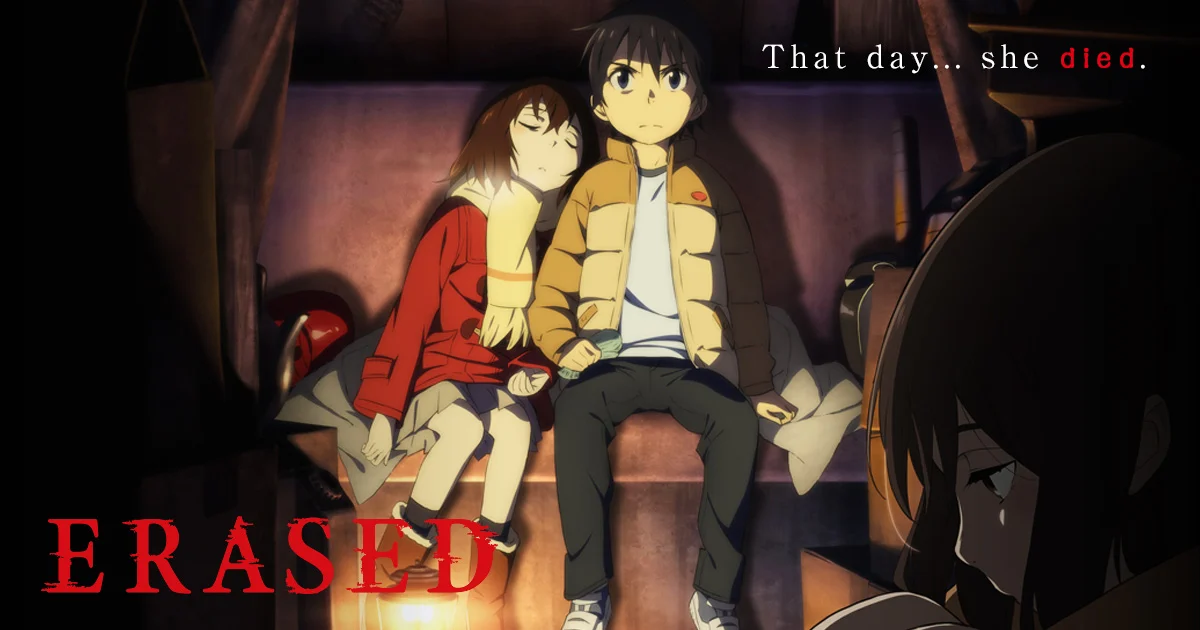
The reason to choose ERASED is the relationship between its mystery and its everyday moments. Sharing a meal, noticing that someone is alone or making room for a classmate can carry real suspense because safety is not something these children can take for granted. You are not simply waiting for a name to be revealed; you want a vulnerable person to have a different experience of the world.
That makes it an approachable recommendation for someone who wants emotional stakes as well as clues. Its 12-episode length also makes the commitment easy to judge before you start. You can finish its TV story without signing up for several seasons.
Keep in mind: a compact runtime comes with a compressed final stretch. Viewers who mainly want an intricate, difficult-to-solve whodunit may find less to work with than viewers drawn to the relationships. Child abuse, abduction and murder are central subjects, so “short” does not mean light viewing.
Where to watch: check the ERASED anime page on Crunchyroll. It is a different production from the live-action series of the same name.
Monster — for a patient investigation with moral weight
Dr. Kenzo Tenma’s decision to save a child’s life eventually connects him to a series of murders. The resulting journey takes the story beyond one gifted doctor or one dangerous person, into the lives of people caught around them.
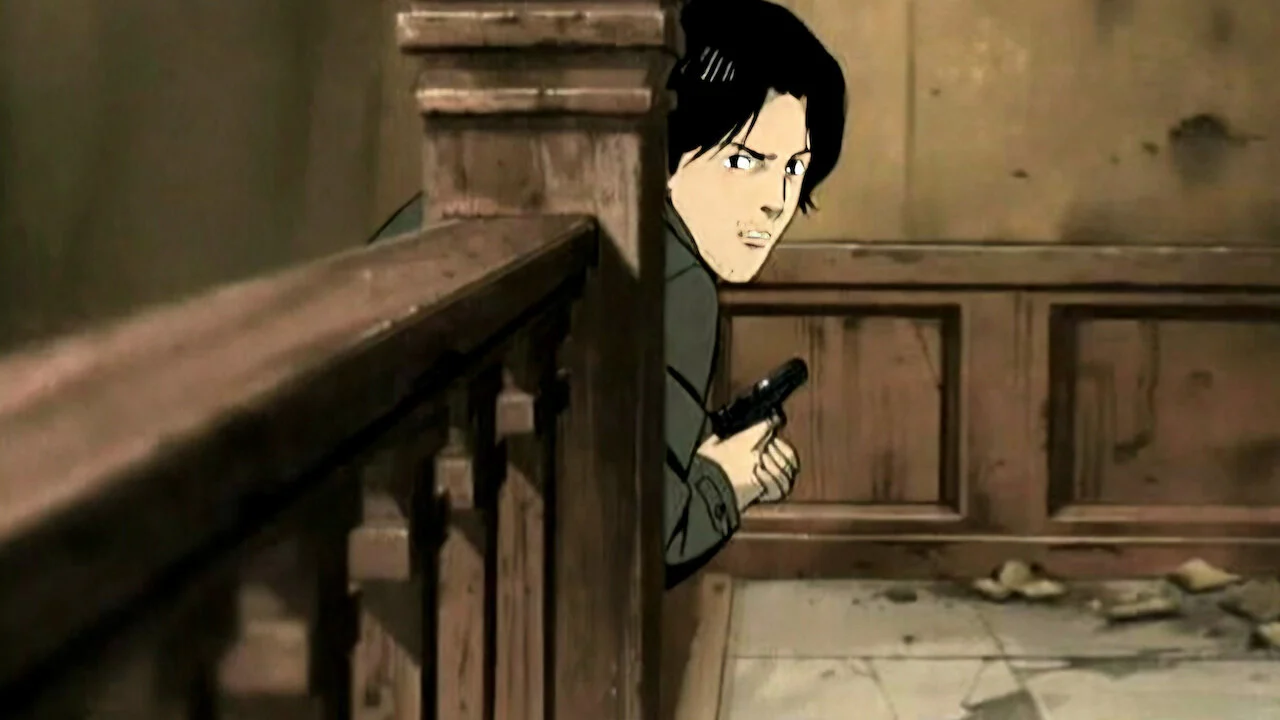
Choose Monster when you want an investigation to feel lived in. Its supporting characters have fears, compromises and histories of their own. Spending time with them gives the central questions weight: what does it mean to preserve a life, what do people owe one another, and how easily can a person be reduced to the worst thing associated with them?
This is the clearest contrast to Death Note’s more theatrical contests. Monster often builds dread through an encounter, a recollection or a change in how you understand someone. It asks you to hold details and people in mind over a much longer run.
Keep in mind: 74 episodes are a substantial commitment. Its detours are part of the experience, not brief interruptions before the next showdown. If you want a fast chain of reversals every night, start elsewhere. If you enjoy a crime story that gives its supporting lives room to matter, that patience can be the attraction.
Where to watch: check Monster on Netflix.
Psycho-Pass — for crime fiction built around a disturbing system
In Psycho-Pass, technology assesses people’s psychological state and their potential for criminal behavior. Rookie inspector Akane Tsunemori enters a police force that acts on those judgments. The immediate question is how to catch criminals; the more unsettling one is who gets to define a criminal in the first place.
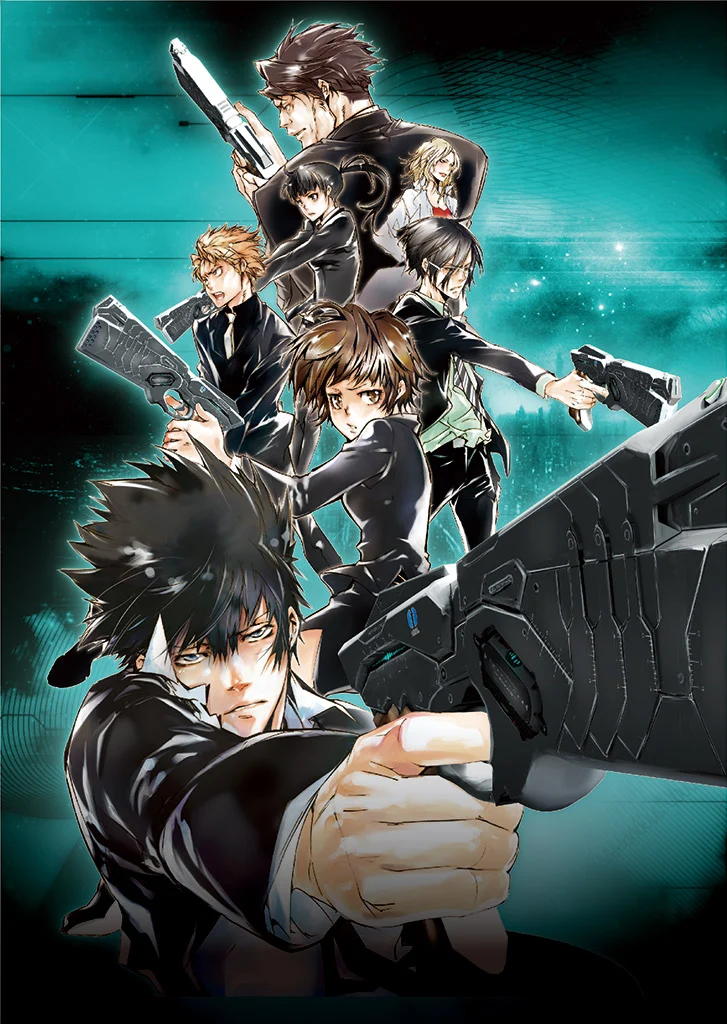
The first season works particularly well if you like institutions to be part of the conflict. Akane’s position gives her practical responsibilities as well as beliefs. It is one thing to doubt a system in conversation and another to decide what to do when your work, colleagues and weapons operate through it.
The cases also give the setting consequences. Surveillance is not just a futuristic visual motif: it shapes what people expect of themselves and what the police consider evidence. That is the reason to choose this over a thriller concerned mainly with one exceptional mind.
Keep in mind: the violence can be graphic, and the series includes sexual violence and other disturbing material. Start with the original 22-episode first season. The 11-episode extended edit is another presentation of that season, not its sequel; later seasons and films are separate commitments.
Where to watch: check Psycho-Pass on Crunchyroll, paying attention to the season or edition shown.
Steins;Gate — for suspense that grows out of a familiar routine
An eccentric group in Akihabara discovers a way to send messages into the past. At first, the laboratory feels as much like a place for conversation and odd experiments as the starting point for a thriller. That contrast is crucial to its appeal.
Steins;Gate gives you time to become familiar with the group before the consequences of changing events accumulate. The suspense depends on that familiarity: a changed detail matters because you have a sense of how things used to be. Its science-fiction mechanism becomes personal rather than remaining a clever abstract puzzle.
Keep in mind: the opening asks for patience with banter, exaggerated personas and character comedy. Someone expecting the immediate pressure of Death Note can easily bounce off it. Start with the original 2011 series in release order; do not interrupt a first viewing to follow a complicated timeline guide involving Steins;Gate 0. The main TV story is 24 episodes, with specials and other installments beyond that.
Where to watch: check the original Steins;Gate listing. Make sure it contains the original series in your region rather than only Steins;Gate 0.
Paranoia Agent — for a mystery that keeps changing shape
A mysterious attacker becomes the center of an expanding story about pressure, fear and escape. Rather than keeping one stable perspective, Paranoia Agent moves among different people and the stories they tell themselves.
This is the pick for a viewer who enjoys uncertainty about the frame of the story itself. An explanation can be revealing because of why someone wants to believe it, not only because it resolves a clue. Satoshi Kon’s series makes that slipperiness part of its atmosphere, combining social observation with increasingly surreal unease.
Keep in mind: it is not the most straightforward introduction to mystery anime. If your main pleasure is reconstructing a single logical chain and receiving a neat answer to every question, ERASED or Death Note is an easier starting point. Paranoia Agent’s 13 episodes are short in total length, but they ask for attention and a tolerance for ambiguity. The subject matter includes suicide and other distressing themes.
Where to watch: check Paranoia Agent on Crunchyroll.
Which thriller anime should you watch first?
- For your first anime thriller: choose Death Note if you want a clear contest, or ERASED if you want a shorter, more emotionally direct story.
- For a short finished series: ERASED and Paranoia Agent both take roughly five hours, but their storytelling is very different. Choose the former for a personal mystery and the latter for surreal psychological tension.
- For something after Death Note: Monster offers moral questions with a slower investigative rhythm; Psycho-Pass shifts the pressure toward policing and institutions. Neither is simply another Light-versus-L contest.
- For science fiction: choose Psycho-Pass for crime and social systems, or Steins;Gate for time-travel consequences and attachment to a small group.
All the links above lead to official services. Availability, subscriptions and audio options depend on your country; a visible catalog page does not always mean its episodes are playable locally. Check the episode list before subscribing.
Questions before you start
Which should you choose for a psychological thriller?
Choose Monster for grounded psychological tension, Paranoia Agent for distorted perception, or Death Note for a direct battle of wits. Monster takes time to explore people caught around its central investigation. Paranoia Agent makes uncertainty and social pressure part of the storytelling itself. Death Note is the more immediate choice if you want opposing goals you can follow from the start. If your priority is solving a compact mystery, ERASED is a better fit than choosing purely by the psychological-thriller label.
Are psychological thriller anime the same as horror anime?
No. A psychological thriller builds pressure through perception, motives, decisions and uncertainty. Horror aims more directly at fear or revulsion, though one show can do both. Death Note’s central appeal is a contest of information, while Paranoia Agent frequently moves closer to psychological horror.
Which one has the least viewing commitment?
ERASED has 12 main episodes, followed by Paranoia Agent with 13. Choose based on tone as well as length: both handle difficult material. A shorter episode count does not guarantee an easier evening.
What if I want suspense with a fantasy setting?
Consider Re:Zero’s first season if repeated failure and psychological pressure appeal to you. If you would rather explore a world with less constant tension, our fantasy anime guide compares several different moods.